


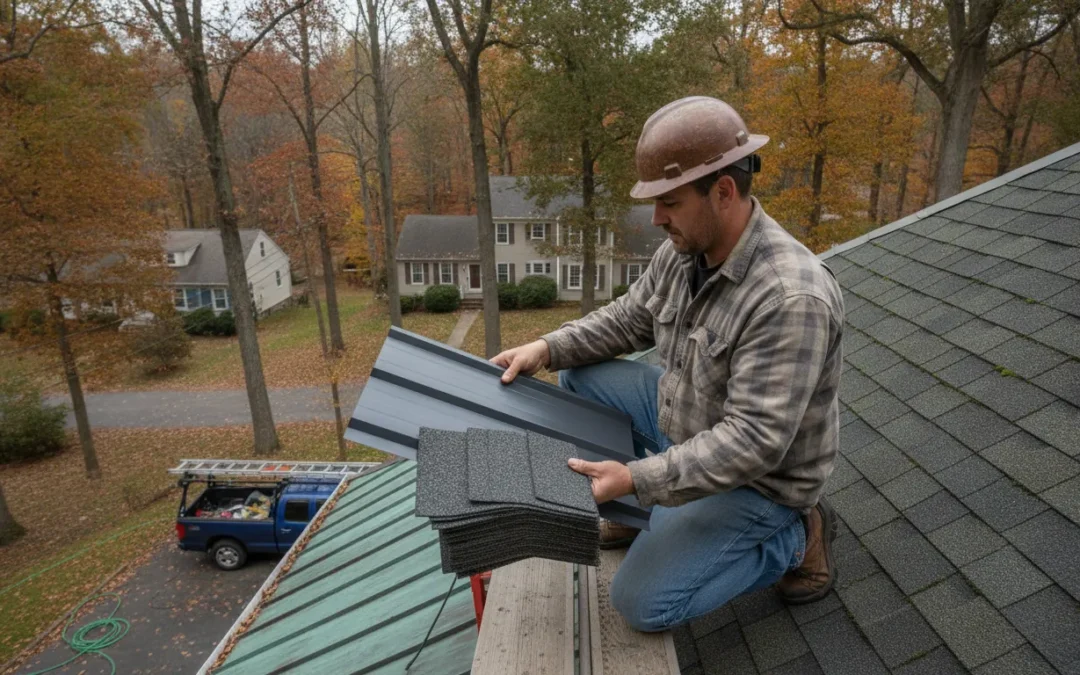
Choosing a roof in Pennsylvania is not simply a matter of picking the material that looks best in a sample. This metal vs asphalt shingles pennsylvania guide helps homeowners and property owners compare roofing systems by building type, roof design, weather exposure, maintenance expectations, and project plans.
Ready to compare roofing options for your property? Request a free estimate from MNM Roofing Professionals or call (570) 793-5715.
Quick answer: Metal and asphalt shingles can both be appropriate in Pennsylvania, but neither is right for every roof. The best choice depends on the structure, slope, drainage, snow and wind exposure, installation details, maintenance plan, and the product selected for the project.
Metal and asphalt shingles are common starting points, but rubber, flat, rolled, and stone-coated steel systems may suit specific residential, commercial, or agricultural applications. A useful comparison begins with the conditions your roof must handle and the details that affect performance over time.
What should Pennsylvania property owners compare first?
Start with the property rather than the material label. A roof in the Poconos may need a different snow-management discussion from a home in the Lehigh Valley. A commercial building in Luzerne County may have different access, drainage, and maintenance needs from a single-family home. The roof system should be selected after those conditions are understood.
Building type and roof design
A home, commercial building, and agricultural structure may have different requirements. Building size, occupancy, roof access, drainage, and the need to coordinate roofing with wall or agricultural panels can all affect the practical choice. Roof geometry matters as well. Slopes, valleys, penetrations, eaves, and transitions influence how a system is detailed and maintained. A material that fits one roof may not be the best match for another.
Homeowners can review MNM’s residential roofing services, while commercial and agricultural owners may need a broader system discussion.
Exposure and assembly details
Pennsylvania properties should be evaluated for wind, precipitation, winter conditions, nearby trees, debris, and the way water leaves the roof. Metal roofing is a durable, weather-resistant roof cladding, but performance depends on the complete assembly and installation. In cold climates, condensation can form beneath metal roofing, making underlayment, ventilation, insulation, and air sealing important parts of the review.
Roof slope, snow management, and site-specific structural requirements also deserve attention where snow loads or falling snow create concerns. An installer should explain how the proposed roof assembly addresses these conditions instead of making a broad promise about a material category.
Maintenance expectations and project horizon
Ask who will inspect the roof, how easily details can be accessed, and what maintenance the property owner is prepared to manage. Drainage, debris, penetrations, flashing, and material compatibility should be part of that conversation. Then consider the project horizon. Is the priority a practical replacement for the current building use, a long-term ownership plan, a future sale, or coordination with other construction?
Verified product specifications
Before choosing, request the actual product and installation details. Compare the proposed system, substrate preparation, underlayment, ventilation approach, flashing, fasteners, snow considerations, and manufacturer documentation. Avoid relying on broad claims about cost, lifespan, energy savings, or warranties. A clear estimate from an in-house roofing team should connect the recommended material to the building and explain what is included in the scope.
Metal vs asphalt shingles in Pennsylvania: key differences
Metal and asphalt shingles can both be appropriate for Pennsylvania properties, but they are not interchangeable in every situation. The right comparison starts with the building, roof design, weather exposure, repair expectations, and product specifications documented in the proposal.
| Planning factor | Metal roofing | Asphalt shingles |
|---|---|---|
| Upfront planning | Confirm panel or shingle type, roof geometry, fastening details, underlayment, ventilation, and how the system handles snow and water. | Confirm shingle type, roof deck condition, underlayment, flashing, ventilation, and the installation details included in the scope. |
| Weather and maintenance | Metal is a durable, weather-resistant cladding, but drainage, debris, material compatibility, and corrosion prevention still require attention. Building America guidance notes that ponding water and debris can contribute to corrosion. | Maintenance typically centers on keeping shingles, flashing, valleys, and penetrations in good condition, while checking for storm damage and water entry after severe weather. |
| Pennsylvania winter considerations | Cold-weather assemblies need appropriate underlayment, air sealing, insulation, and ventilation. Roof slope and snow-control details should be reviewed for the property. | Snow, ice, and water-management details should be addressed through the full roof assembly, including eaves, ventilation, flashing, and attic conditions. |
| Repairs | Repairs depend on the panel or metal shingle system, fasteners, flashing, and the source of the damage. Matching compatible components matters. | Individual damaged shingles and related components may be addressed during repair, but the underlying deck, flashing, and surrounding roof still need inspection. |
| Appearance | Metal can provide a defined panel or metal-shingle appearance, with finish and profile choices that should suit the building. | Asphalt shingles offer familiar profiles and color options that can work across many residential roof designs. |
| Building fit | May suit residential, commercial, or agricultural applications when the system is selected for the structure and installed correctly. | Often considered for residential applications, while commercial and agricultural buildings may require a different documented system. |
| Installation verification | Verify product specifications, snow-load design, slope, underlayment, ventilation, fasteners, and snow guards where needed. The local building authority should be consulted for site-specific requirements. | Verify shingle specifications, flashing, ventilation, underlayment, roof-deck preparation, and the installer’s complete scope of work. |
Key takeaway: The material comparison is useful only when it includes the complete roof assembly. Installation quality, flashing, ventilation, drainage, and site conditions can influence performance as much as the visible roofing surface.
MNM Roofing Professionals offers both shingle and metal roofing, with in-house installation and owner oversight. Ask for the proposed assembly, product documentation, repair plan, and maintenance expectations in writing before choosing.
When can asphalt shingles be the practical choice?
Asphalt shingles may suit a property owner who values design flexibility, a familiar installation approach, and straightforward repair planning. They are available in different colors and profiles, which can make it easier to coordinate the roof with siding, trim, and the overall character of a home. That flexibility can matter when the roof has multiple slopes, dormers, or other visible design details.
They can also fit projects where the owner wants to address a specific roof area rather than make a broader change to the building. Repair decisions still depend on the source and extent of the problem. A contractor may need to inspect flashing, ventilation, decking, penetrations, and adjacent shingles before deciding whether a localized repair or a larger replacement is appropriate. Matching existing materials is another practical consideration, especially on an older roof.
Consider the building and the project plan
Asphalt shingles are commonly considered for residential roofing, but the right system still depends on the property. Roof pitch, drainage, attic conditions, weather exposure, and the condition of the existing assembly should be reviewed before materials are selected. A commercial or agricultural building may have different structural, span, drainage, or maintenance requirements, so a residential-style choice should not be transferred automatically to those settings.
Owner priorities matter as well. Some people place the greatest weight on appearance and a broad range of design choices. Others may prioritize a particular maintenance plan, repair strategy, or compatibility with an existing roof assembly. Product specifications should be reviewed rather than relying on a general assumption about every asphalt shingle.
Review MNM’s roofing resources before requesting an evaluation and comparing documented options for the property.
When does a metal roof make sense?
A metal roof may be worth considering when your planning horizon, property type, and maintenance priorities point toward a system built around long-term performance rather than a familiar default. That does not make metal the right answer for every Pennsylvania property. The roof still needs to suit the building, its geometry, the surrounding conditions, and the product specifications selected for the project.
Start with the shape and function of the roof. Steeper sections, complex transitions, valleys, penetrations, and areas where snow may slide require careful planning. In higher-snow areas, roof slope and snow-management details should be evaluated so falling snow does not create a hazard. The roof structure also needs to be designed for the site-specific snow load, which is why the local building authority and the installer should be part of that discussion. Building America guidance on metal roofs also emphasizes proper roof assembly design for cold-weather conditions.
Ventilation and underlayment deserve attention in Northeast Pennsylvania. Condensation can form beneath metal roofing when the underside becomes colder than the surrounding air. Air sealing, insulation, ventilation, and appropriate underlayment can help manage moisture and reduce risks associated with winter conditions. These details belong in the scope of work, not as an afterthought after the panels are chosen.
Metal can also make sense when the owner wants a maintenance plan that focuses on keeping drainage paths clear. Check fasteners and penetrations, and watch for debris or ponding water that could contribute to corrosion. Material compatibility matters too. The finish, fasteners, flashings, underlayment, and adjacent materials should be selected as a coordinated system.
Installation quality is as important as the panel itself. Ask how the contractor will handle edges, valleys, flashing, ventilation, snow management, and manufacturer requirements. MNM Roofing Professionals documents both shingle and metal roofing among its offerings and describes an in-house installation model with owner oversight and no subcontracting.
What other roofing systems fit Pennsylvania properties?
Metal and asphalt shingles are not the only options for Pennsylvania properties. The right system depends on the building’s use, roof design, drainage needs, project goals, and the product specifications confirmed for that application. A system that suits a detached home may not be the right approach for a commercial building, agricultural structure, or roof with a different slope.
Rubber, flat, and rolled roofing
Rubber, flat, and rolled roofing systems can be relevant when the roof design or building use calls for an alternative to traditional pitched-roof shingles. Flat and low-slope areas require careful attention to water movement, seams, penetrations, and the overall condition of the roof assembly. Rolled roofing may also be considered for appropriate applications. Suitability should be determined from the existing roof and documented product requirements rather than from the material name alone.
These systems are often part of a broader property decision. A commercial owner may be evaluating the roof alongside equipment, access, drainage, and business operations. A homeowner may need a solution for a specific addition or low-slope section rather than a complete replacement of the primary roof.
Tilcor stone-coated steel
Tilcor stone-coated steel is another documented option to compare with standard metal and asphalt systems. Its appearance may matter to an owner who wants a different visual character from conventional exposed metal. The decision should still account for the roof layout, installation requirements, surrounding property, and the specifications of the selected product. Avoid choosing it based on a general promise about lifespan, cost, or performance without a project-specific review.
Commercial and agricultural applications
Commercial and agricultural buildings may need a different conversation from a residential roof replacement. Building use, panel needs, roof configuration, and the practical demands of the property should shape the estimate. MNM Roofing Professionals documents agricultural panels and wall panels in addition to roofing systems, which can be relevant when a project involves more than the roof surface. Its commercial roofing work serves property owners comparing systems for business buildings.
MNM serves residential and commercial customers across Northeast Pennsylvania, including the Poconos, Luzerne County, and the Lehigh Valley. Its in-house crews and owner oversight support a project review focused on the actual building, not a one-size-fits-all material recommendation.
Need help narrowing the options? Contact MNM Roofing Professionals for a property-specific discussion and free estimate, or call (570) 793-5715.
How should you plan a material decision and estimate?
A useful estimate starts with the property, not a preferred material. Whether you are comparing metal and asphalt shingles or considering another documented system, the goal is to match the roof assembly to the building and the way you plan to use it.
- Inspect the existing roof and building. Document the current roof condition, visible damage, drainage, roof shape, penetrations, attic or interior concerns, and any areas that need closer review. For a metal system, the assembly may also require attention to underlayment, ventilation, condensation control, and snow-related design considerations. A site inspection gives the estimate a more reliable starting point than photographs alone.
- Define the property and project needs. Identify whether the work involves a home, commercial property, or agricultural building. Discuss the roof’s use, appearance, access, weather exposure, maintenance expectations, planned ownership horizon, and whether the project is a repair, replacement, or new installation.
- Compare documented systems. Ask for the specific product or system details being considered, including the material type, panel or shingle profile, underlayment approach, ventilation components, flashing, drainage, and applicable manufacturer documentation. Compare installation requirements and maintenance implications, not just the visible finish. MNM offers shingle, metal, rubber, flat, rolled, and Tilcor stone-coated steel systems, depending on the project.
- Verify installation and scope. Make sure the written scope identifies preparation, removal, deck or substrate repairs if needed, flashing, ventilation, cleanup, and related gutter or panel work. Confirm who will perform the installation and who will oversee the project. MNM describes its crews as in-house employees rather than subcontractors, with owner Miguel Ramirez involved in estimates and project oversight.
- Review the estimate and maintenance plan. Read the scope line by line and ask questions about exclusions, product documentation, workmanship responsibilities, inspection points, and how future repairs or maintenance will be handled. Keep the final estimate and system details for your records.
Pennsylvania roofing material questions, answered
Is it cheaper to install metal roofing or asphalt shingles?
There is no responsible answer without reviewing the property and the proposed assembly. The estimate can change with roof size, geometry, tear-off needs, decking condition, flashing, ventilation, access, and the selected product. Compare the complete scope rather than judging materials by a single upfront figure. Maintenance expectations and the building’s future use may also affect which option makes practical sense.
Do insurance companies prefer one material?
Do not assume an insurer prefers metal or asphalt shingles. Coverage and claim decisions depend on the policy, documented damage, property conditions, and the insurer’s review. A contractor may assist with documenting storm damage and navigating an insurance claim, but that assistance does not guarantee coverage or approval. Ask your insurer what documentation it requires, then have the roof assessed professionally.
Can metal roofing be installed over existing shingles?
Sometimes, but it is an assembly-specific decision, not a shortcut that fits every roof. The contractor should evaluate the existing shingles, decking, moisture conditions, roof shape, ventilation, flashing, fasteners, and local project requirements. In cold climates, condensation can form beneath metal roofing, making underlayment and roof-assembly ventilation important. Snow-load design and safe snow management also deserve review.
What maintenance does each material need?
Both systems benefit from periodic inspection, clear drainage, sound flashing, and prompt repairs after severe weather. Metal roofs need attention to debris, ponding water, corrosion risks, fasteners, and material compatibility. Asphalt shingles should be checked for storm damage, lifted or missing shingles, exposed components, and drainage problems. A professional assessment can identify issues before they become larger repairs. For more information, review MNM’s residential roofing services.
Get started with a roofing material estimate
The right roofing system depends on your property’s design, use, and long-term plans. MNM Roofing Professionals can discuss options for a Pennsylvania home, commercial property, or agricultural building and prepare a free estimate based on the project. The company is family-owned, licensed, bonded, and insured, with in-house crews and owner oversight. Those details support a clear conversation, but the proposed material and scope should still be evaluated for the specific property.
Contact MNM Roofing Professionals for your free estimate or call (570) 793-5715 to discuss your roofing material options.