


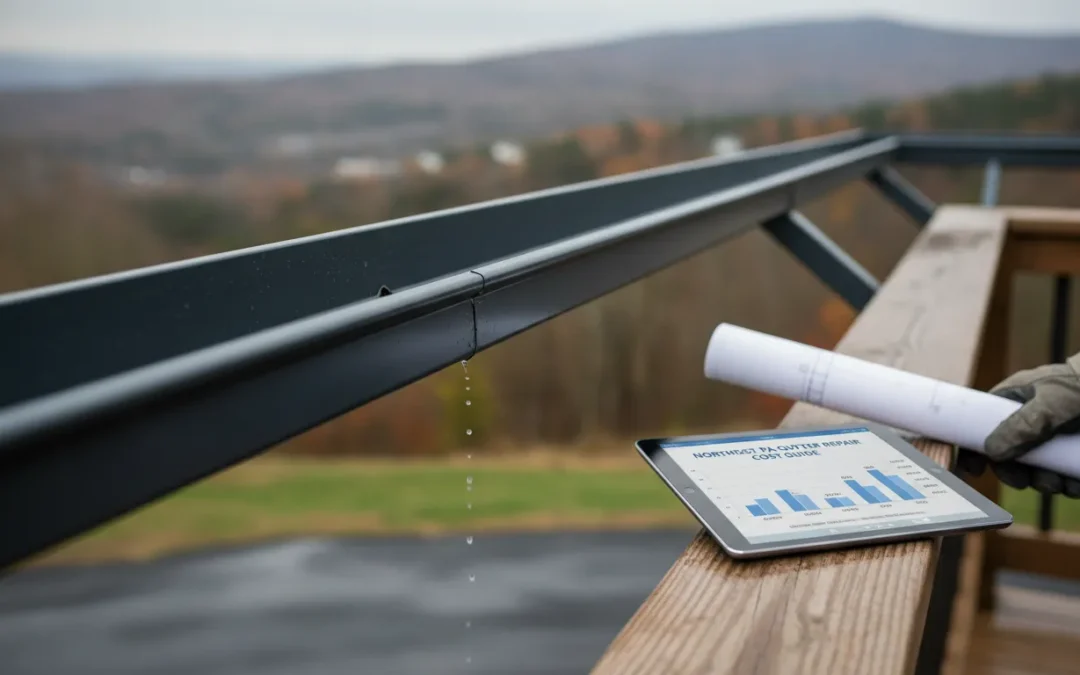
Gutter problems rarely stay limited to the gutter. A small leak can send water behind the fascia, stain your siding, weaken the roof edge, or create pooling near the foundation. That makes understanding the gutter repair cost more important than looking at the price of a sealant or replacement part alone. In Northeast Pennsylvania, snow, ice, heavy rain, falling branches, and freeze-thaw cycles can all affect the final estimate. This guide explains what homeowners and commercial property owners in the Poconos, Lehigh Valley, and surrounding counties can expect to pay. You’ll learn which repairs cost the most, what affects pricing, and when replacement may make better financial sense.
Key Takeaways
- Budget for the full scope of work: Gutter repairs in Northeast Pennsylvania may cost $75 to $1,200 or more, depending on materials, access, damage severity, labor, and related roof-edge repairs.
- Compare repair and replacement options: A small leak or loose hanger may need a targeted fix, while widespread rust, recurring failures, sagging, or poor drainage may make a new system more practical.
- Request a detailed professional estimate: Choose a licensed, bonded, and insured contractor who explains materials, labor, cleanup, warranties, storm damage, and any hidden fascia or soffit repairs.
What Does Gutter Repair Cost in Northeast Pennsylvania?
Gutter repair in Northeast Pennsylvania typically costs between $75 and $1,200 or more, depending on the damage, gutter material, and difficulty of the work. A small leak or loose hanger may be a quick repair, while storm damage, rotted fascia, or multiple failing sections can require more labor and replacement materials.
National averages offer a helpful starting point, but local conditions can change the final price. Homes in the Poconos, Lehigh Valley, and surrounding counties experience heavy rain, snow, ice, falling branches, and freeze-thaw cycles. A two-story home with steep rooflines or limited access may cost more to service than a one-story home with a simple roof design.
MNM Roofing Professionals provides gutter installation and downspout services across Northeast Pennsylvania. An inspection can identify the source of the problem and help you decide whether a targeted repair or full replacement makes more financial sense.
National averages: $194–$636
According to CMB Roof’s gutter repair cost guide, gutter repairs typically cost between $194 and $636 nationwide, with an average of about $395. This range may cover common work such as sealing leaks, replacing hangers, correcting minor sagging, or repairing a small section.
It may not include specialty materials, extensive fascia damage, difficult roof access, or emergency service. Your local estimate could also be higher if the contractor needs to remove several sections or address related roof and drainage problems.
A professional inspection should cover more than the visible gutter. Water may run behind the gutter, overflow at one point, or travel along the fascia before causing damage elsewhere. Finding the actual source helps prevent a temporary repair that leaves the larger drainage issue unresolved.
Typical costs: $75–$1,200+
Simple repairs may start around $75 when the problem involves one loose fastener, a small leak, or a minor adjustment. More complex work can exceed $1,200 when several sections need replacement, downspouts are damaged, or gutters have pulled away from the fascia.
The project price depends on more than the size of the damaged area. A contractor may need to match an older gutter profile, replace rotted mounting surfaces, work around landscaping, or remove and reinstall sections. Wind and ice damage can also affect the roof, siding, fascia, and downspouts at the same time.
Request a written estimate before work begins. The proposal should separate labor, materials, disposal, and recommended repairs. It should also explain what happens if the contractor finds hidden damage after removing the gutter.
Hourly, per-foot, and minimum service rates
Gutter contractors may charge by the hour, by the linear foot, or through a minimum service fee. Labor commonly ranges from $50 to $150 per hour, while some projects cost approximately $4 to $30 per linear foot, according to CMB Roof.
Hourly pricing may work well when a contractor needs to troubleshoot an uncertain problem. Per-foot pricing can be easier to compare when several gutter sections require replacement. However, the rate alone does not show the full project cost.
Ask whether the estimate includes a service minimum, equipment, sealants, fasteners, cleanup, and disposal. Confirm whether the quoted amount covers the complete repair or only the initial labor. If additional damage is discovered, the contractor should document it and explain the cost before expanding the scope of work.
Local labor and access costs in the Poconos and Lehigh Valley
Local gutter repair costs depend on the material, damage severity, home height, roof pitch, and available access. A steep roof, narrow side yard, tall foundation, or limited space for equipment can add setup time and require additional safety measures.
Weather also affects gutter condition and scheduling. Snow and ice may pull gutters away from the fascia, while strong wind can bend sections or damage downspouts. Emergency service may cost more when it involves temporary protection, urgent scheduling, or difficult working conditions.
A contractor familiar with Northeast Pennsylvania can also identify drainage problems that may not be obvious from the ground. For example, a downspout may release water too close to the foundation or fail to handle runoff from a large roof section. Compare detailed scopes of work instead of choosing only by the lowest starting price.
Gutter cleaning, repair, and replacement costs
Cleaning, repair, and replacement address different problems, so each service has its own price range. Cleaning removes leaves and other debris, but it may also reveal rust, cracks, loose hangers, separated seams, or damaged outlets. Clearing the system without repairing those issues may only postpone a more expensive problem.
According to American Gutter Service’s repair and replacement cost guidance, gutter repairs generally cost about $100 to $625, while full replacement may range from $1,500 to $6,000. Replacement may offer better value when the system is old, repeatedly failing, badly corroded, or too small for the roof area.
The best choice depends on the gutter system’s condition and expected lifespan. A professional should explain whether a localized repair can restore proper drainage or whether repeated repairs will cost more than installing a new system.
Residential versus commercial repair costs
Residential gutter repairs are often easier to estimate because the systems are smaller and the roof layouts are familiar. Still, a two-story home, complex roofline, steep pitch, or difficult access can increase labor costs. Repairs may also involve fascia, soffits, siding, or nearby roof damage.
Commercial repairs can cost more because commercial buildings often have longer gutter runs, larger drainage systems, flat or low-slope roofs, and more demanding access requirements. The project may require lifts, additional safety equipment, specialty materials, or scheduling around tenants and business hours.
For either property type, compare written estimates from qualified contractors. Each proposal should identify the damaged sections, materials, labor, drainage corrections, cleanup, and warranty coverage. Choosing a licensed, bonded, and insured in-house team can also provide clearer accountability from the first inspection through the completed repair.
What Gutter Repairs Cost the Most?
The most expensive gutter repairs usually involve more than a small leak or loose connector. Costs can rise when water has damaged the fascia, soffits, roof edge, or foundation, or when a gutter system needs extensive regrading and replacement. Storm damage can also create several problems at once, such as bent gutters, detached hangers, cracked downspouts, and damaged roof materials.
Access plays an important role in the estimate. A one-story gutter above a porch is generally easier to reach than a second-story section beside a steep roof. In Northeast Pennsylvania, snow, ice, fallen branches, and freeze-thaw cycles can cause damage that is not visible from the ground. A professional inspection can determine whether you need a simple repair or a larger drainage correction.
Ask for a written estimate that identifies the affected sections, materials, labor, cleanup, and any related repairs. MNM Roofing Professionals provides gutter installation and downspout services for residential and commercial properties, including seamless systems designed to reduce the number of joints where leaks can develop.
Repairing leaks, holes, and seams
Small leaks are often among the more affordable gutter repairs, particularly when the gutter remains secure and the surrounding metal is in good condition. A contractor may clean and dry the area, apply compatible sealant, or reseal a leaking joint. Small holes can sometimes be patched when the metal around them is still strong.
The cost increases when leaks appear in several places or when seams have separated because of ice, expansion, corrosion, or poor installation. In those cases, replacing a short section may provide a more reliable result than applying sealant repeatedly. American Gutter Service explains gutter repair options, noting that simple joint repairs generally cost less than correcting widespread structural damage.
Fixing loose hangers, sagging, and pitch
Gutters need firm support and a slight slope toward the downspouts. Loose hangers, missing fasteners, or deteriorated fascia can cause a section to sag and hold standing water. A contractor may replace the hangers, reset the gutter pitch, or attach the system to stronger mounting points.
Sagging gutter repairs commonly cost about $75 to $300, depending on the affected length and the difficulty of reaching it. The estimate may be higher if the fascia behind the gutter has rotted or if several sections have shifted out of alignment. Correcting the slope is important because a gutter can look intact while still overflowing when water cannot flow toward the downspout.
Clearing clogs and repairing downspouts
Leaves, pine needles, roof granules, and ice can block gutters and downspouts. Clearing a clog may cost about $160 to $400 when the blockage is tightly packed, difficult to reach, or located inside a long downspout. Gutter guards, multiple stories, and heavy debris can also affect the price.
Downspout work may include reconnecting separated joints, replacing crushed sections, adding elbows, or installing an extension. Downspout repair or replacement generally costs about $5 to $25 per linear foot. The repair should direct water far enough away from the home to limit pooling near the foundation, basement walls, and walkways. A contractor should also check whether the outlet is correctly sized for the roof area it serves.
Replacing end caps, outlets, elbows, and sections
Small components can create serious drainage problems. A missing end cap allows water to spill from the gutter, while a damaged outlet can send water behind the gutter and into the fascia. Elbows and connectors may crack, separate, or clog after repeated exposure to ice and changing temperatures.
Repairs to sectional gutters generally cost about $100 to $225, although the final price depends on the material, profile, length, and availability of a matching part. A contractor may recommend replacing a complete section when a small component will not seal properly. Matching the existing color and shape can take additional time, especially on older properties or homes with uncommon gutter profiles.
Repairing fascia, soffits, and hidden water damage
Gutters attach along the roof edge, so ongoing leaks can damage the fascia, soffits, roof sheathing, and trim behind them. These areas may appear sound from the ground but show rot after a loose gutter section is removed. Fascia and soffit repairs cost about $10 per linear foot as a general reference, though access, materials, painting, and the amount of deterioration can change the estimate.
Water that runs behind a gutter for an extended period may spread into the roof edge or wall assembly. Severe water damage to foundations and fascia can average around $8,000, according to CMB Roof’s gutter repair cost information. This is not a standard gutter repair price, but it illustrates why prompt repairs can help prevent a localized drainage issue from becoming a major exterior project.
Fixing wind, ice, and storm damage
Wind, hail, falling branches, and heavy ice can bend gutters, pull out hangers, crack downspouts, or tear sections away from the roofline. Repairs for physical storm damage commonly cost about $240 to $550. Costs may be higher when the damage affects multiple stories, the roof edge, fascia, or roofing materials.
After a severe storm, take clear photographs before moving debris or making permanent repairs, as long as the area is safe. Temporary measures may help control water, but a professional inspection can reveal related roof, gutter, and downspout problems. MNM Roofing Professionals offers residential roofing services and can help coordinate exterior repairs when a storm affects more than the gutter system.
Which Gutter Materials Cost More to Repair?
The material used for your gutters has a direct effect on repair costs. Vinyl and aluminum are usually less expensive because replacement parts are common and the materials are relatively easy to handle. Steel, copper, zinc, and wood gutters can cost more because repairs may require specialized tools, custom parts, or experienced labor.
The estimates below reflect common repair ranges, but your actual price may differ. A contractor will also consider the length of the damaged section, the height of your home, roofline access, and whether water has damaged the fascia, soffit, siding, or roof edge. In Northeast Pennsylvania, snow, ice, falling branches, and freeze-thaw cycles can add to the amount of work required.
A small leak may only need sealant or a replacement fastener. Extensive corrosion, crushed sections, or repeated leaks may call for a larger repair or full replacement. Reviewing a detailed gutter repair cost guide can help you understand general pricing, but a local inspection is the best way to account for your property and drainage system.
When comparing estimates, ask each contractor to identify the gutter material, profile, color, affected sections, labor, cleanup, and any related carpentry work. This makes it easier to compare similar scopes instead of choosing based only on the lowest starting price.
Vinyl: $75–$200
Vinyl gutter repairs commonly cost between $75 and $200. Vinyl is lightweight, affordable, and widely available, which makes it relatively simple to replace a cracked section, end cap, elbow, or downspout fitting.
The material can become brittle after years of sun exposure, freezing temperatures, snow, and ice. A crack that appears small may spread when the gutter is moved during repair. Vinyl can also split if a ladder, branch, or heavy ice load strikes it.
If only one section is damaged, a targeted repair may be practical. However, replacing several fragile sections one at a time can become less cost-effective than installing a new run. A contractor should inspect the entire gutter line before recommending a repair, especially if the system is faded, warped, or repeatedly pulling away from the roofline.
Aluminum: $85–$200
Aluminum gutter repairs often range from $85 to $200. Aluminum remains a popular choice for homes in the Poconos and Lehigh Valley because it is lightweight, resists rust, and comes in a wide selection of colors.
Typical repairs include sealing a leaking seam, replacing loose fasteners, correcting a minor dent, or installing a new section or downspout component. Aluminum can bend or pull away from the fascia after heavy snow, ice buildup, strong wind, or impact from a falling branch.
A dent does not always require replacement, but a sharp bend near an outlet or downspout can restrict water flow. Color matching may also affect the estimate. If the existing finish has faded or the original color is no longer available, replacing a longer section may produce a more consistent appearance.
Steel and galvanized steel: $100–$225
Repairs to steel and galvanized steel gutters typically cost between $100 and $225. These materials are strong, but their weight can make removal, repositioning, and installation more labor-intensive than repairs involving vinyl or aluminum.
Galvanized steel has a protective coating that helps resist corrosion. Once that coating becomes scratched or worn, rust can develop around seams, hangers, fasteners, and outlets. Surface rust may be treatable, but rust-through holes usually require a replacement section rather than a layer of sealant.
A contractor should also inspect the fascia behind a damaged steel gutter. Water may have entered through a corroded seam and weakened the wood that supports the system. Repairing the gutter without correcting damaged fascia can lead to another failure, particularly when the system is carrying snowmelt or heavy rain.
Copper: $125–$250
Copper gutter repairs commonly cost between $125 and $250. Copper is durable, corrosion-resistant, and valued for the distinctive patina it develops over time. It is often found on historic properties, custom homes, and buildings where appearance is a major consideration.
Repair work may include soldering a seam, replacing a hanger, repairing an outlet, or fitting a new copper section. The replacement material should be compatible with the existing system. A bright new piece may stand out beside older copper until it develops a similar patina.
Copper repairs also require care around roofing, siding, trim, and masonry. An experienced contractor can determine whether a leaking seam can be repaired or whether the damaged section needs replacement. Ask whether the estimate includes matching the existing profile, securing the gutter properly, and cleaning away debris after the work is complete.
Zinc: $150–$325
Zinc gutter repairs can cost approximately $150 to $325. Zinc systems are durable and long-lasting, but they may require a contractor who understands the material and has access to suitable joining methods, fasteners, and replacement parts.
A sealant or patch designed for aluminum may not work properly on zinc. Using incompatible materials can lead to an appearance mismatch, poor adhesion, or premature failure. This is one reason zinc repairs may include custom fabrication rather than standard parts from a home improvement store.
The contractor should evaluate more than the visible damage. Custom zinc systems often depend on precise slopes, outlets, downspouts, and connections to move water effectively. If one section has shifted or developed a leak, the surrounding components may also need adjustment. Request a written scope that identifies the proposed repair materials and any custom work.
Repairing wood gutters on specialty homes
Wood gutters are uncommon, but they may still appear on historic homes, specialty properties, and buildings designed around traditional architectural details. Repairs often cost about $150 to $300, depending on the type of wood, the extent of rot, and the accessibility of the gutter.
A repair may involve removing decayed material, fitting a replacement section, sealing the joints, and restoring the interior lining. The fascia and roof edge should also be inspected because trapped water can cause rot beyond the visible gutter damage.
Preserving the original appearance may require custom milling, careful staining, or specialty coatings. Ask whether the estimate includes resealing or protecting the repaired wood. Regular inspections and maintenance can help identify soft spots, peeling coatings, and small leaks before they require a larger restoration project.
Seamless versus sectional gutter costs
Sectional gutters are sold in shorter pieces that connect along the roofline. Repairs often cost between $100 and $225, depending on the number of leaking joints and whether the work involves sections, connectors, end caps, or downspout fittings.
Seamless gutters are formed on-site to match the length of the building. With fewer joints, they have fewer locations where leaks can develop. Repairs commonly range from $125 to $250, although the final price depends on the damaged area and whether a replacement section must be custom-formed.
Seamless systems can still suffer damage from ice, wind, impact, loose hangers, and poor drainage. MNM Roofing Professionals offers seamless gutter installation and downspout services throughout Northeast Pennsylvania. During an estimate, ask whether the damaged portion can be repaired without replacing the entire run.
Matching materials, profiles, colors, and parts
A proper gutter repair should restore both appearance and performance. The new section, hangers, fasteners, elbows, end caps, outlets, and downspouts need to work with the existing system. Differences in material or profile can create weak connections or interfere with water flow.
Color matching matters too, especially when the repaired area is visible from the street. Existing gutters may have faded, and some original colors or profiles may no longer be available. If an exact match cannot be found, replacing a longer section may look more consistent than installing one noticeably different piece.
Before work begins, ask the contractor to list the proposed material, gutter size, profile, color, and replacement parts in writing. The estimate should also explain whether it includes removal, disposal, cleanup, and repairs to the fascia or soffit. This information helps you compare estimates fairly and avoid unexpected costs.
What Affects Your Gutter Repair Estimate?
A gutter repair estimate depends on more than the visible drip, crack, or loose section. A contractor also considers the gutter system’s length, material, accessibility, drainage design, and the condition of the roof edge. If water has reached the fascia, soffit, siding, or foundation, the work may involve more than replacing a small gutter component.
Most professional gutter repairs cost between $100 and $625, depending on the damage and the amount of labor involved. Simple work, such as resealing a joint or reattaching a hanger, generally costs less than repairing several sections or replacing damaged fascia. Larger projects involving difficult access, extensive water damage, or custom replacement parts can cost $1,200 or more.
The best way to understand your potential cost is to schedule an inspection and request a written estimate. MNM Roofing Professionals serves homeowners and commercial property owners throughout Northeast Pennsylvania, including the Poconos and Lehigh Valley. Its gutter installation and downspout services can help address both gutter damage and drainage problems.
Damage severity and hidden water damage
The severity of the damage is one of the biggest factors in your estimate. Resealing one leaking seam or replacing a loose hanger usually takes less time than correcting widespread sagging, separated joints, or crushed gutter sections. The contractor may also need to replace end caps, outlets, elbows, or downspouts if several parts of the system are affected.
Visible gutter damage can point to a larger problem. Water that spills behind the gutter may rot the fascia or soffit, stain the siding, or damage the roof edge. If the supporting wood is soft, the contractor may need to repair it before installing new hangers. Ask whether the quote covers only the gutter or also related water damage. American Gutter Service explains how repair costs vary by damage type and severity.
Gutter length, home height, and roof access
The length of the gutter system affects the amount of material, setup, and labor required. A small repair may have a service minimum, while a longer replacement section may be priced by the linear foot. The number of downspouts, corners, outlets, and damaged areas can also change the total.
Building height is another important consideration. Two-story and three-story homes require additional ladder setup, safety equipment, and time. Professional gutter labor commonly ranges from $50 to $150 per hour, with access becoming more involved as the building gets taller. Steep roofs, porches, fences, landscaping, and narrow side yards can create extra challenges. CMB Roof’s gutter repair guide explains how home height can affect labor costs.
Material, profile, color, and part availability
The gutter material affects both the repair price and the availability of matching parts. Vinyl is often the least expensive option. Aluminum is widely used for residential properties because it is lightweight and available in many colors. Steel costs more and may require additional care to prevent corrosion. Copper and zinc repairs typically cost more because the materials are pricier and installation may require specialized experience.
The gutter’s profile, width, finish, and color matter as well. A contractor may have standard aluminum parts available but need to order an unusual color or older profile. If the existing system has been discontinued, matching one section may be difficult. Replacing a longer run may provide a better fit and more consistent appearance. Gerken Roofs outlines common gutter material costs in Pennsylvania.
Local labor rates across Northeast Pennsylvania
Labor rates vary across Northeast Pennsylvania based on the project’s location, scope, travel time, and access requirements. A repair in the Poconos may involve different conditions from a project in the Lehigh Valley, Lackawanna County, or Luzerne County. Properties near Greentown, Nanticoke, Whitehall Township, Milford, or surrounding communities may also have different travel and scheduling considerations.
The contractor’s qualifications can affect pricing, too. A licensed, bonded, and insured company with an in-house crew may charge more than an informal handyman, but the estimate may include proper equipment, safer work practices, workmanship warranties, and clearer accountability. When comparing quotes, check whether labor, materials, removal, cleanup, and follow-up service are included. Local professionals can also recommend repair methods suited to Pennsylvania’s snow, ice, wind, and freeze-thaw conditions.
Seasonal demand, snow, ice, and emergency service
Snow and ice can place significant strain on gutters and downspouts. Ice buildup may pull gutters away from the fascia, split seams, or block water from draining. Heavy snow, falling branches, and repeated freeze-thaw cycles can damage hangers, corners, and downspout connections.
Seasonal demand may affect appointment availability and pricing, particularly after a major storm or during winter emergencies. Emergency work may cost more when it requires after-hours labor, temporary stabilization, or the removal of hazardous debris. If water is entering the building or pooling near the foundation, arrange an inspection promptly. A temporary fix may limit further damage, but the system should receive a full assessment once the property is safe to access.
Gutter guards, disposal, permits, and service fees
A repair estimate may include more than labor and replacement parts. If damaged gutter sections must be removed, the contractor may charge for disposal. Some companies also have a minimum service charge, inspection fee, travel charge, or setup fee for difficult properties. Ask about these costs before approving the work so you can compare estimates accurately.
Gutter guards are another potential expense. They can limit the leaves and debris entering your gutters, but they do not remove the need for inspections or occasional cleaning. Installation commonly costs about $8 to $10 per linear foot, and larger projects may cost several thousand dollars. CMB Roof provides additional information about gutter guard installation costs. Permits are not required for every gutter repair, although requirements can vary by municipality and project scope.
Custom fabrication and seamless gutter construction
Standard replacement parts work well for many repairs, but older homes, unusual rooflines, and specialty gutter systems may require custom fabrication. Matching the existing profile, slope, outlet placement, or color can take additional time. A contractor may need to take precise measurements, order a specific component, or fabricate a replacement section on site.
Seamless gutters are formed to the length of each roofline, which reduces the number of joints where leaks can develop. They often cost more than sectional gutters because installation requires specialized equipment and trained workers. Seamless aluminum gutters commonly cost about $8 to $13 per linear foot installed in Pennsylvania, New Jersey, and Delaware, according to Global Home’s gutter installation cost guide. Custom work may be especially useful when a repair needs to match an older system or when several sections require replacement.
Should You Repair or Replace Your Gutters?
The right choice depends on the condition of the entire gutter system, not just the most visible problem. A small leak at one seam may need a simple repair, while widespread sagging, corrosion, or repeated clogs can point to a larger drainage issue. Before choosing a solution, inspect the gutters, downspouts, fascia, soffits, siding, and areas around the foundation for signs of water damage.
Repairing gutters usually costs less upfront. According to American Gutter Service’s gutter repair and replacement guide, repairs commonly cost between $100 and $625, while full replacement may range from $1,500 to $6,000. Your estimate may vary based on the material, home height, accessibility, damage, and total gutter length.
A professional inspection can help you compare the immediate repair cost with the longer-term value of replacement. In Northeast Pennsylvania, snow, ice, heavy rain, and seasonal debris can place significant stress on gutters. Any recommended repair should address the source of the problem, not only the visible symptom.
Repairing localized damage cost-effectively
Repair is often the practical choice when damage is limited to one or two areas. A contractor may be able to seal a small hole, reconnect a separated joint, replace a damaged elbow, tighten loose hangers, or install a new end cap without disturbing the rest of the system.
This approach works best when the gutters are relatively new, straight, securely attached, and free from widespread corrosion. It also makes sense when water flows properly through the system and the nearby fascia and soffits remain in good condition.
Ask the contractor to identify what caused the damage. A leaking seam may need new sealant, but it could also be pulling apart because the gutter has shifted or lacks proper support. A patch may only provide temporary relief if the underlying alignment or drainage problem remains.
Knowing when replacement offers better value
Replacement may offer better value when damage is widespread or the existing system is near the end of its service life. Gutters that sag across several sections, pull away from the fascia, or leak in multiple locations often require more labor to restore than homeowners initially expect.
Older aluminum gutters with widespread rust, pinholes, or repeated failures may continue to need repairs after the first service visit. Installing a new system can provide more dependable drainage and help reduce the risk of water collecting near the foundation or entering the roofline.
Replacement also allows you to correct problems with gutter size, slope, downspout placement, and discharge points. MNM Roofing Professionals provides gutter installation and downspout services for homeowners who need a properly fitted system instead of another temporary patch.
Considering gutter age, corrosion, cracks, and repeat repairs
Age is an important part of the repair-or-replace decision. Aluminum gutters that are more than 20 years old may be less reliable, particularly when they also show corrosion, cracks, loose connections, or sagging. Older systems can also be difficult to match when a single section needs replacement.
Inspect the bottom and inside edges of each gutter. Rust spots, pinholes, peeling finishes, and splitting seams can spread over time. Pay close attention to outlets and end caps because these areas handle concentrated water flow and commonly develop cracks.
Repeated repairs are another warning sign. If the same gutter has needed several fixes, add up the total cost and consider how long each repair lasted. Replacement may make more sense when problems keep returning or when water has begun affecting the fascia, soffits, siding, landscaping, or foundation drainage.
Applying the 30%–50% replacement-cost guideline
A practical way to compare your options is to measure the repair estimate against the cost of a complete replacement. Repairs may be reasonable when the cost is less than about 30% of replacement. When repairs reach 30% to 50% of the replacement price, take a closer look at the system’s age and remaining service life.
For example, spending $300 to repair one damaged section of a newer system may be worthwhile. Spending $900 on repeated repairs to an old, sagging system deserves more consideration if a full replacement would cost $2,500. The percentage is a planning tool, not a strict rule.
A lower-cost repair may not be worthwhile if the surrounding gutters are severely corroded. On the other hand, a repair that prevents immediate water damage could be sensible even when replacement is likely later. Request a written estimate that separates repairs, replacement sections, labor, disposal, and recommended upgrades.
Replacing undersized gutters or correcting poor drainage
Some gutter problems result from poor design rather than physical damage. Undersized gutters may overflow during heavy rain, especially on large roof sections or steep slopes. A system can also struggle when it has too few downspouts, incorrect pitch, blocked outlets, or downspouts that release water too close to the foundation.
Replacing one leaking section will not correct these issues. A contractor may need to review the roof area, gutter profile, downspout capacity, and discharge points before recommending a solution. In some cases, downspout extensions or a change in water flow may solve the problem. Other homes may need larger gutters or additional downspouts.
This assessment matters in Northeast Pennsylvania, where heavy rain, snowmelt, and ice can quickly expose drainage weaknesses. Properly sized gutters and downspouts help direct water away from siding, walkways, landscaping, and the foundation.
Repairing one section versus replacing the full system
Replacing one section can work when the remaining gutters are in good condition and the new material can be matched closely. This approach may be suitable after localized wind or tree damage, particularly when the rest of the system remains secure and drains correctly.
A section replacement becomes less appealing when the gutters are old, difficult to match, or attached with outdated hangers and fasteners. Labor can account for much of the project cost, so removing and rehanging one section may approach the cost of installing a coordinated new system. Differences in color, profile, and finish may also make a partial replacement noticeable.
Ask whether the new section will connect correctly with existing seams and downspouts. A qualified contractor should explain which components can be reused, which need replacement, and whether the repaired area will have a separate warranty from the rest of the system.
Comparing cost, lifespan, warranty, and maintenance
Cost matters, but it should be considered alongside expected lifespan and maintenance needs. Vinyl gutters typically cost less, though cold weather can make them brittle. Aluminum is lightweight and widely used. Steel offers greater strength but requires attention to corrosion. Copper and zinc cost more but may provide a long service life when properly installed.
Material prices vary by type. Gerken Roofs’ Pennsylvania gutter cost guide lists approximate ranges of $3 to $6 per linear foot for vinyl, $5 to $9 for aluminum, $8 to $12 for steel, and $15 to $25 for copper. Your estimate may differ based on installation height, custom fabrication, removal, and drainage changes.
Compare warranties, cleaning requirements, fasteners, gutter guards, and downspout maintenance before making a decision. A lower initial price may not be the best value if the system needs frequent repairs or lacks workmanship coverage. Ask for details about the materials, installation warranty, cleanup, and recommended inspection schedule before approving the work.
How Much Do Insurance and Storm-Damage Repairs Cost?
Storm-related gutter repair costs depend on the type of damage, the size and height of the property, the materials involved, and your insurance coverage. A few loose hangers may be inexpensive to repair, while a fallen tree can damage the gutters, roof edge, fascia, siding, and drainage system at once.
Your policy may cover sudden damage caused by wind, hail, falling trees, or storm debris. However, coverage depends on the policy language, deductible, exclusions, and the cause of the damage. A professional inspection can help identify the full scope of the problem and provide documentation for your insurance company. MNM Roofing Professionals serves Northeast Pennsylvania with residential roofing and repair services, including storm-related roof and gutter work.
Covering wind, hail, falling trees, and debris damage
Homeowners insurance may cover gutter repairs or replacement when a covered storm event causes the damage. High winds can pull gutters away from the fascia, hail can dent aluminum sections, and falling branches can crush gutters or damage downspouts. Storm debris may also block drainage and cause water to overflow into vulnerable areas around the home.
Coverage varies, so review your policy or contact your insurance provider before authorizing major work. Take photographs of detached sections, dents, fallen branches, roof damage, and water intrusion as soon as conditions are safe. The American Gutter Service guide explains how insurance coverage may differ between storm damage and routine gutter deterioration.
Excluding wear, corrosion, clogs, and poor maintenance
Insurance generally does not cover normal aging, corrosion, clogged gutters, or damage caused by poor maintenance. A gutter that slowly rusts, sags over several seasons, or overflows because leaves have accumulated may be treated as a maintenance issue instead of storm damage.
This distinction can affect your claim. A sudden break after a severe windstorm is different from a long-standing leak or loose section. Keep records of gutter cleaning, inspections, repairs, and previous damage when possible. These records can help establish whether the problem began with a specific storm or developed gradually. Regular maintenance also gives you a chance to address small concerns before they affect the fascia, siding, landscaping, or foundation.
Paying deductibles and out-of-pocket costs
Even if your policy covers storm damage, you may need to pay your deductible before insurance contributes to the repair. You may also have out-of-pocket expenses for excluded damage, optional upgrades, code-related work, or repairs that cost less than the deductible.
As a general reference, gutter repairs may cost about $100 to $625, while full replacement can range from approximately $1,500 to $6,000. Actual prices in the Poconos, Lehigh Valley, and surrounding areas vary based on roof height, access, snow and ice damage, gutter material, and custom requirements. The American Gutter Service cost guide provides additional repair and replacement ranges.
Ask for an itemized estimate that separates necessary repairs, covered storm damage, and optional improvements.
Documenting damage before temporary repairs
Before moving branches or making temporary repairs, photograph the damage from several angles. Take close-up images of crushed gutters, separated seams, loose hangers, damaged downspouts, and water stains near the fascia or foundation. Also record the storm date and when you first noticed the problem.
If water is entering the home, take reasonable steps to limit further damage, but avoid climbing onto a wet roof or working near unstable trees and power lines. Keep receipts for emergency materials and temporary services. An experienced contractor can inspect the affected areas, identify the likely cause, and document repairs more safely. The CMB Roof repair guide explains why professional inspections can help identify underlying damage and support warranty-backed work.
Coordinating roof, gutter, and downspout claims
A storm may damage several connected parts of your property. A fallen branch, for example, can affect shingles, flashing, gutters, downspouts, fascia, and siding during the same event. When you contact your insurer, describe all visible damage instead of focusing only on the gutter section that appears most damaged.
A contractor can inspect the roofline and drainage system together, then provide a written scope of work. This approach may help identify overlooked problems before water reaches the attic, walls, or foundation. MNM Roofing Professionals also provides gutter installation and downspout services for property owners who need to repair or replace storm-damaged drainage components.
Prompt attention matters because continued overflow can create more costly problems. CMB Roof reports that water damage affecting fascia and foundations can become expensive, making a complete inspection worthwhile after a major storm.
Making emergency repairs to prevent further damage
Emergency repairs should protect the property until permanent work can begin. Depending on the situation, a contractor may secure loose gutter sections, clear a dangerous blockage, cover an exposed roof area, or redirect water away from the foundation. Ask your insurance company whether specific temporary measures are covered, and keep receipts for approved work.
Do not attempt repairs near downed power lines, unstable trees, steep roofs, or serious structural damage. Small leaks, cracks, and loose hangers should be addressed promptly because repeated overflow can damage fascia, siding, landscaping, and foundation drainage. A licensed, insured professional can assess the risk and recommend whether a localized repair or full replacement makes more sense.
How Can You Compare Gutter Repair Services in Northeast Pennsylvania?
Comparing gutter repair companies takes more than choosing the lowest estimate. A dependable contractor should explain what caused the problem, identify related roof-edge or drainage damage, and recommend a practical repair or replacement plan. Pricing can vary based on gutter material, home height, roof access, damage severity, and the amount of work required. In Northeast Pennsylvania, snow, ice, falling branches, and heavy rain can also affect the scope of a repair.
As you review contractors, look for clear communication, proper insurance, local experience, and a written warranty. Ask how the company handles storm damage, hidden problems, emergency work, and changes to the original estimate. These details can help you avoid repeated repairs and unexpected charges.
Choosing MNM Roofing Professionals for seamless gutters and downspouts
MNM Roofing Professionals installs seamless gutters and downspouts for homes and businesses throughout Northeast Pennsylvania. Seamless gutters are formed on-site to match the length of each roofline, reducing the number of joints where leaks can develop. The team can assess leaking seams, sagging sections, damaged outlets, poor drainage, and downspouts that release water too close to the foundation.
Review MNM Roofing’s gutter installation services to learn more about its gutter and downspout work. During an estimate, the team can also check whether gutter problems connect to the roof, fascia, soffits, or drainage around the property. That broader inspection helps you address the cause instead of only treating the visible symptom.
Checking for licensed, bonded, and insured in-house teams
Before hiring a gutter repair company, ask whether the contractor is licensed, bonded, and insured. These credentials can help protect you if an accident occurs on your property or a problem develops during the project. Ask to see current documentation, and confirm that the coverage applies to the employees performing the work.
It is also worth asking who will complete the project. MNM Roofing Professionals uses its own in-house team rather than subcontracting the work. The company is licensed, bonded, and insured, giving customers one point of contact from the initial estimate through completion. If the project includes roofing or exterior repairs, confirm that the same team can coordinate those services and explain how each part of the work will be handled.
Understanding how in-house work affects quality and pricing
An in-house crew can make communication easier because the contractor preparing your estimate is connected to the people completing the work. Questions about materials, drainage, access, and unexpected damage can be addressed directly instead of passing through several companies. This arrangement may also help the contractor maintain consistent installation and cleanup standards.
In-house work does not automatically mean the estimate will be the lowest. Professional labor often accounts for much of a gutter repair price, especially on two-story homes or properties with difficult roof access. Ask what the labor charge includes, such as removal, disposal, replacement hangers, downspout adjustments, sealing, cleanup, and follow-up service. A detailed scope lets you compare the total value of each proposal rather than focusing only on the starting price.
Requesting written scopes, itemized costs, and warranties
A written estimate should explain the proposed work in plain language. Look for the gutter length or sections being repaired, material and profile, replacement parts, labor, disposal, access equipment, taxes, and any additional services. If the contractor finds hidden fascia or soffit damage, ask how that work will be priced before approving it.
Request information about both material and workmanship warranties. The warranty should state what it covers, how long coverage lasts, and whether exclusions apply to ice, storm damage, clogs, or poor maintenance. Comparing at least three reputable estimates can help you spot missing services or unusually low pricing. Guidance from gutter repair cost experts also recommends asking contractors about warranties and reviewing estimates carefully.
Considering free estimates, financing, claims assistance, and community programs
A free estimate can help you determine whether your gutters need a small repair, several replacement sections, or a complete system. During the visit, ask whether the estimate includes nearby roofing, fascia, soffits, and downspouts. These areas can show related water damage and may affect the long-term success of the gutter repair.
MNM Roofing Professionals offers free estimates, financing options, and assistance with insurance claims when storm damage is involved. The company also participates in community programs for eligible customers. If wind, hail, a falling tree, or another covered event damaged your gutters, photograph the damage before making permanent repairs and ask your insurer about coverage. Insurance generally does not cover deterioration, corrosion, or damage caused by neglected maintenance. You can review MNM Roofing’s residential roofing services for related repair and claim support.
Comparing contractors, gutter specialists, handymen, and DIY work
A gutter specialist or roofing contractor is usually the better choice when repairs involve multiple sections, steep roofs, storm damage, fascia, or drainage problems. Roofing contractors may also identify issues a general handyman could miss, such as water entering behind the gutter or damage along the roof edge. For commercial properties, choose a company with experience around larger roof systems, access requirements, and active business operations. MNM Roofing provides commercial roofing services for property owners who need coordinated exterior work.
DIY maintenance may be reasonable for clearing debris from an accessible, single-story gutter, but ladders and long gutter sections create safety risks. If the gutters are old, corroded, or repeatedly failing, compare another repair with replacement. Labor can make up a large part of either option, so replacement may offer better value when several components need attention. Leave work near steep roofs, electrical lines, or structural damage to a qualified professional.
Reviewing service areas, customer feedback, and storm response
Choose a contractor that regularly serves your area and understands local weather conditions. Northeast Pennsylvania properties may face snow loads, ice buildup, freeze-thaw cycles, heavy rain, and wind damage. Ask whether the company serves your county, responds to emergency calls, and has experience with your roof design and gutter material.
MNM Roofing Professionals serves communities across the Poconos, Luzerne County, the Lehigh Valley, and surrounding areas, with locations near Greentown, Nanticoke, and Whitehall Township. When reviewing customer feedback, look for comments about communication, punctuality, cleanup, workmanship, and how the company handled unexpected repairs. After a storm, ask what temporary measures can limit further water intrusion and when a permanent repair can be scheduled. Also confirm whether emergency service, temporary protection, and storm-related documentation appear separately on the estimate.
How Should You Prepare for a Gutter Repair Estimate?
A little preparation can make your gutter repair estimate more accurate and easier to understand. Before the contractor arrives, take photos of the problem areas, note when you first noticed the issue, and write down what happens during rain or snow. Water may overflow from one corner, run behind the gutter, collect near the foundation, or stain the siding. These details can help the contractor identify the likely cause.
Gather any information you have about the gutter system, including its approximate age, material, profile, and whether it is sectional or seamless. If another company has completed repairs, keep the invoices or warranty documents nearby. It is also helpful to mention related concerns, such as damaged fascia, soffits, roof edges, siding, or landscaping.
MNM Roofing Professionals serves homeowners across Northeast Pennsylvania with gutter installation and downspout services. A professional assessment can help you understand whether a localized repair is enough or whether the existing system needs more extensive work. Preparing your questions in advance also gives you a better basis for reviewing the estimate.
Gathering photos, measurements, damage details, and access information
Take close-up photos of leaks, rust, cracks, separated seams, sagging sections, and loose downspouts. Include wider images that show each damaged area in relation to the rest of the home. Photos taken during or after rainfall may show overflowing water or poor drainage more clearly.
Write down when the issue occurs and whether it gets worse during heavy rain, snow, or ice. You can provide approximate gutter lengths if you know them, but do not climb onto a roof or use a ladder in an unsafe location. Also mention porches, fences, landscaping, overhead wires, steep rooflines, or tight spaces that could affect access.
If you see damage to the fascia, soffits, siding, or roof edge, include that information too. Gutter problems can sometimes point to water damage in connected areas, so the contractor may need to inspect more than the gutter itself.
Checking what a detailed quote includes
A written quote should describe the problem, the recommended repair, the materials, and the expected labor. It should also explain whether the price includes removing damaged sections, installing replacement parts, sealing seams, securing hangers, adjusting the slope, and testing water flow.
Ask whether cleanup, disposal, downspout adjustments, gutter guard removal, or fascia and soffit repairs are included. Small repairs may have a minimum service charge, while difficult access can add labor costs even when only a short section needs attention. A detailed breakdown explains why the price may not follow a simple per-foot calculation.
Also ask how the contractor handles unexpected damage. If hidden rot or water damage appears after work begins, find out whether the contractor will contact you for approval before changing the scope. MNM Roofing Professionals offers a free estimate, giving you an opportunity to review the proposed work before making a decision.
Comparing estimates beyond the lowest price
For a significant repair, consider getting at least three estimates. Make sure each contractor examines the same areas and provides a similar scope of work. One quote might cover a temporary patch, while another may include replacing a full gutter section, correcting the pitch, and repairing damage behind the gutter.
Review licensing, insurance, experience, workmanship warranties, and communication along with the total price. Ask whether the company uses its own employees or subcontractors. An in-house team can provide more consistent oversight and may make it easier to discuss questions with the people completing the work.
Pay close attention to the materials listed in each quote. A lower price may reflect a different gutter profile, thinner material, fewer hangers, or limited warranty coverage. The strongest estimate is not always the cheapest one. Look for a suitable repair, clear terms, dependable workmanship, and a contractor who explains the recommendation in plain language.
Using gutter repair calculators carefully
Online gutter repair calculators can offer a rough starting point, but they cannot inspect your home. Their results may not account for material type, gutter length, damage severity, home height, roof design, accessibility, local labor rates, or hidden water damage. They may also overlook problems affecting the fascia, soffits, roof edge, siding, or foundation.
Use a calculator to prepare questions rather than set a final budget. Only measure areas you can safely reach from the ground, and avoid assuming that every section has the same issue. A short repair on a two-story home may require more labor and equipment than a longer repair on an accessible one-story section.
An on-site assessment remains the most reliable way to identify the work involved. Ask the estimator which conditions affect the price and whether the recommendation addresses visible damage only or includes an inspection of connected areas.
Asking about materials, labor, warranties, and cleanup
Ask which material and gutter profile the contractor recommends, and whether the replacement will match the existing system. Aluminum, steel, copper, and vinyl differ in appearance, durability, availability, and repair cost. When one section needs replacement, matching its color, finish, and shape may require a compatible part or custom fabrication.
Clarify how labor is calculated. The contractor may use an hourly rate, project price, per-foot rate, or minimum service charge. Ask whether the quote includes removing old materials, sealing joints, securing hangers, testing downspouts, hauling away debris, and cleaning the work area.
You should also understand the warranty before approving the repair. Ask how long material and workmanship coverage lasts, what it includes, and how service requests are handled. A contractor such as MNM Roofing Professionals can explain how gutter repairs relate to the roof and other exterior components.
Separating necessary repairs from optional upgrades
Ask the contractor to separate urgent repairs from optional improvements. A leaking seam, detached downspout, or badly sagging section may need prompt attention to keep water away from the foundation and exterior materials. Gutter guards, decorative changes, and color upgrades may be useful, but they might not be necessary to resolve the immediate problem.
Replacement may offer better value when gutters have widespread corrosion, recurring leaks, multiple cracks, or damage across several sections. It may also be worth considering when the system is near the end of its service life or is too small for the roof area. Replacing an undersized system can address repeated overflow more effectively than patching the same locations.
When appropriate, ask for two options: one plan that addresses the immediate issue and another that replaces or improves the larger system. Compare each option’s cost, expected service life, maintenance needs, drainage performance, and warranty. This allows you to address essential damage while making an informed decision about additional work.
How Can You Reduce Future Gutter Repair Costs?
The most effective way to reduce future gutter repair costs is to address small problems before they affect the roof, fascia, soffits, siding, or foundation. In Northeast Pennsylvania, gutters face falling leaves, heavy rain, snow, ice, and repeated freeze-thaw cycles. A minor leak or loose hanger can become a larger issue when water repeatedly collects in the wrong place.
A simple maintenance routine can help you identify trouble early. Inspect the gutters in spring and fall, remove debris, test each downspout, and look for sagging, rust, cracks, or separation. Regular cleaning and early repairs can help prevent more expensive structural damage, according to this guide to gutter repair costs.
It is also important to consider how water moves away from your home. Downspout extensions, properly pitched gutters, and suitable drainage areas can reduce pooling near the foundation. If your system overflows or needs repeated repairs, the underlying issue may be poor drainage or an aging design rather than one damaged section. A professional inspection can help you compare the cost of a targeted repair with a larger gutter upgrade.
Inspecting gutters each spring and fall
Schedule a gutter inspection at least twice a year, preferably in spring and fall. A spring inspection can reveal damage from winter snow, ice, and freeze-thaw conditions. A fall inspection gives you time to remove debris and prepare the system for heavier rain and winter weather.
Check the full gutter line for cracks, rust, separated seams, loose fasteners, missing end caps, and sections pulling away from the fascia. Gutters should guide water toward the downspouts without holding standing water. Sagging sections often indicate damaged hangers, an incorrect pitch, or excess debris.
Look for warning signs around the house, too. Water stains below the eaves, peeling paint, damp siding, and soil erosion near the foundation may indicate a drainage problem. Finding these issues early can help you repair a small section before water damages nearby materials.
Clearing debris and flushing gutters
Leaves, pine needles, shingle granules, and other debris can block water from reaching the downspouts. As water backs up, it may spill over the gutter edge or collect against the roofline. Heavy debris also adds weight, which can place extra stress on hangers and fascia.
After removing visible debris, flush the gutters with a garden hose. Start at the end farthest from the downspout and observe how quickly water moves through the system. Slow drainage, bubbling, or water backing up may signal a clog deeper inside the downspout.
Nationally, professional gutter cleaning often costs about $125 to $175 per visit, though local prices vary based on home height, access, system length, and debris levels. For homes that need new or improved drainage, MNM Roofing Professionals installs gutters and downspouts throughout Northeast Pennsylvania.
Trimming overhanging branches
Branches above the roof can drop leaves and twigs directly into the gutters. During storms, dead or weak limbs may break and damage the roof or gutter sections. Keeping nearby trees trimmed reduces debris and lowers the risk of impact damage.
Inspect branches near the roofline, especially those that are dead, split, or growing toward the gutters. Do not cut large limbs near power lines or attempt removal if a branch could fall onto the roof. A qualified tree professional can handle work that requires climbing, specialized equipment, or careful removal.
Trimming branches also makes routine inspections easier. Gutter problems may point to related damage from branches, ladders, or hail. Addressing the tree hazard and the gutter damage together can help prevent repeat service calls.
Adding downspout extensions and improving drainage
A gutter system may be free of leaks and still discharge water too close to the foundation. Downspout extensions carry runoff farther from the home, where it can drain safely. They are particularly useful when the ground slopes toward the house or water collects near a basement wall.
Test each downspout with a hose and watch where the water exits. It should flow freely and move away from the foundation without pooling beside the home. If the outlet releases water onto a walkway, driveway, or low area, an extension or drainage adjustment may help.
Downspout repairs and replacements can cost about $5 to $25 per linear foot, depending on the material and installation requirements. Depending on the property, a contractor may recommend splash blocks, longer extensions, or buried drainage lines. Improving drainage can reduce water-related damage around the home and limit stress on the gutter system.
Installing gutter guards and scheduling professional cleaning
Gutter guards can reduce the amount of leaves and debris entering your gutters, but they do not eliminate maintenance. The right product depends on factors such as roof pitch, nearby trees, and the type of debris around your home. Fine particles may still collect on top of or beneath some guard designs.
The referenced cost guide places gutter guard installation at roughly $8 to $10 per linear foot. Before adding guards, have the gutters inspected and repaired. Covers installed over sagging, poorly pitched, or damaged gutters may conceal a problem instead of correcting it.
Professional cleaning remains useful even after guards are installed. A technician can remove buildup, inspect fasteners and seams, and confirm that water reaches the downspouts. If your gutter system has many joints or recurring leaks, seamless gutter installation from MNM Roofing Professionals may provide a more durable option.
Repairing leaks, rust, sagging, and loose hangers early
Small gutter problems are usually easier to repair than widespread damage. A localized leak may require a new seal or a short replacement section. Loose hangers can often be refastened when the fascia behind them is still sound. Early repairs also help keep water away from the roof edge, fascia, soffits, siding, and foundation.
Do not ignore rust spots, small holes, separated seams, or sections pulling away from the home. Repeated exposure to rain, snow, and ice can make these issues worse. Sagging may result from damaged hangers, incorrect pitch, excess debris, or deteriorated fascia, so the underlying cause should be corrected.
Repair generally makes sense when damage is limited to a small leak or crack. If corrosion, sagging, or leaks appear throughout the system, replacement may offer better long-term value. Ask for a written inspection so you can compare a targeted repair with a full gutter project.
Choosing safe DIY maintenance or professional repairs
Some basic gutter maintenance may be suitable for homeowners. Removing light debris from a safe, reachable area and checking downspout outlets can be manageable with proper equipment. Ladder work becomes more hazardous on tall homes, uneven ground, steep driveways, and wet surfaces.
Avoid climbing onto the roof or leaning a ladder against an unstable gutter. Do not attempt repairs near power lines, major storm damage, or weakened fascia. Although DIY work may appear less expensive, ladder accidents, incorrect repairs, and hidden water damage can lead to higher costs later.
Contact a professional when gutters are high, damaged across several sections, pulling away from the home, or connected to roof and fascia problems. Look for a contractor that is licensed, bonded, insured, and clear about who performs the work. MNM Roofing Professionals explains its in-house approach, with company teams overseeing estimates, installation, repairs, and cleanup rather than subcontracting the work.
Frequently Asked Questions
How much does gutter repair usually cost in Northeast Pennsylvania?
Most gutter repairs cost between $75 and $1,200 or more. A small leak, loose hanger, or damaged end cap may cost less, while extensive storm damage, difficult access, rotted fascia, or several failing sections can raise the total.
Is it better to repair or replace damaged gutters?
Repairing is often practical when the damage is limited and the rest of the system remains secure and free from major corrosion. Replacement may make more sense when gutters sag in several places, leak repeatedly, have widespread rust, or no longer handle the roof’s water volume.
Does homeowners insurance cover gutter repairs?
Insurance may cover sudden damage caused by wind, hail, falling trees, or storm debris. Policies generally do not cover normal aging, rust, clogs, or neglected maintenance. Photograph the damage, save repair receipts, and contact your insurance provider before approving major work.
What should a gutter repair estimate include?
A detailed estimate should identify the damaged sections, gutter material, replacement parts, labor, access equipment, removal, disposal, cleanup, and warranty coverage. It should also explain how the contractor will handle hidden damage to the fascia, soffits, roof edge, or downspouts.
How can homeowners prevent expensive gutter repairs?
Inspect gutters in spring and fall, clear debris, test downspouts, trim branches near the roof, and make sure water drains away from the foundation. Address loose hangers, leaks, rust, and sagging early. For high or heavily damaged gutters, schedule an inspection with a licensed and insured professional such as MNM Roofing Professionals.