


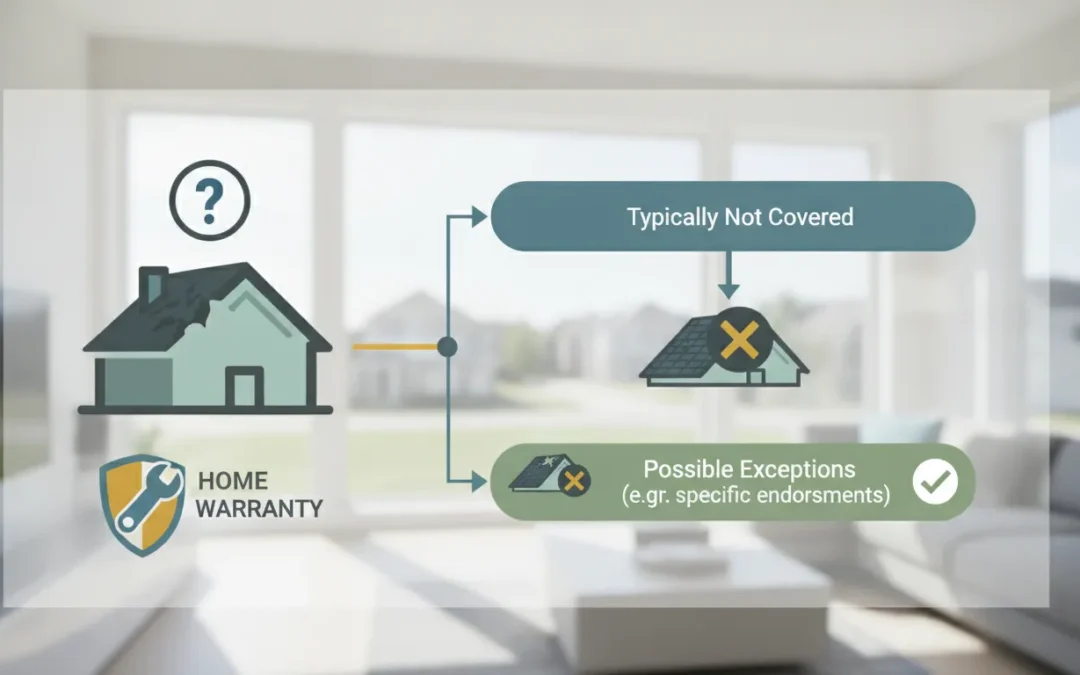
Roof coverage can sound straightforward until you read the fine print. Many homeowners discover that asking whether does home warranty cover roof replacement leads to a more complicated answer. A plan may include limited protection for a qualifying leak, but that does not mean it will pay for an entirely new roofing system. Roof age, material, prior damage, maintenance, and the source of the problem all matter. Homeowners insurance may be more appropriate for sudden damage from hail, wind, fire, or a fallen tree. MNM Roofing Professionals can inspect your roof and explain whether a targeted repair or complete replacement is the more dependable option.
Key Takeaways
- A home warranty usually covers limited leak repairs, not replacement: Most plans may help with small, wear-related repairs, but full replacement, structural damage, and widespread deterioration typically require another payment source.
- Review coverage details before submitting a claim: Check exclusions, roof-age limits, service fees, payout caps, covered materials, inspection requirements, and approved-contractor rules in your contract.
- Get a professional inspection to choose the right next step: A licensed roofing contractor can identify hidden damage, document storm-related issues, and explain whether repair, insurance assistance, or replacement makes sense for your property.
Does a Home Warranty Cover Roof Replacement?
A home warranty may help pay for a limited roof leak repair, but it usually does not cover a complete roof replacement. These plans are service contracts for certain home systems and appliances that fail because of normal wear and tear. A new roof is considered a major structural project, so it typically falls outside standard home warranty coverage.
Before you file a claim, read the contract carefully and identify the type of damage your plan covers. Check for exclusions related to roof age, materials, maintenance, and pre-existing conditions. If your roof is actively leaking, has widespread deterioration, or suffered storm damage, arrange a professional inspection before assuming a warranty will pay.
MNM Roofing Professionals provides residential roofing inspections and services throughout the Poconos, Lehigh Valley, and surrounding Northeast Pennsylvania communities. An inspection can help determine whether a targeted repair is reasonable or whether replacement is the safer long-term option.
Usually, no
Most home warranties exclude full roof replacement. Even when a plan includes roof coverage, it often applies only to a limited repair for a qualifying leak. The provider may pay to patch damaged shingles, reseal a small opening, or repair a specific section of flashing. It generally will not pay to remove the existing roof and install a new roofing system.
The National Roof Certification and Inspection Association explains home warranty roof coverage as protection focused mainly on minor, wear-related issues. Coverage can also depend on the roof’s age, condition, material, and maintenance history. If the roof has widespread deterioration, sagging, or multiple failure points, the warranty company may deny the claim or limit its contribution to a small repair.
What roof coverage actually includes
When roof coverage applies, it usually addresses a minor leak caused by ordinary aging. An approved contractor may patch damaged shingles, reseal a vulnerable area, or repair flashing around a vent, chimney, or other roof penetration. These repairs can stop water from entering through one location, but they do not restore the full roof or extend the life of every roofing material.
Some plans include roof leak protection automatically, while others offer it as an optional add-on. Coverage limits commonly range from about $400 to $1,000, according to NerdWallet’s guide to home warranty roof coverage. That amount may cover a simple repair, but it may not cover emergency service, difficult access, extensive materials, or related construction work. Ask whether the limit includes labor, materials, diagnosis, and temporary protection.
When warranties cover minor leaks, not full replacement
A warranty claim may qualify when a small leak results from normal wear and the affected area meets the contract’s definition of a covered roof component. For example, the plan may cover a limited shingle, flashing, or seal repair. The provider will generally send an approved contractor to inspect the issue before authorizing the work.
Coverage does not necessarily extend to interior stains, damaged drywall, insulation, flooring, or personal belongings. Home warranties usually address the covered roof repair, not every consequence of water entering the property. Take photos of the leak and any affected areas, then contact the warranty company before hiring a contractor or authorizing permanent repairs. This gives you a record of the damage and helps clarify what the plan will pay.
Check for rare replacement allowances
A few warranty contracts may contain limited allowances that sound like replacement coverage, but these provisions are uncommon. In many cases, the allowance applies to a specific repair or pays only a fixed amount toward a covered service. It may not include tear-off, disposal, structural repairs, upgraded materials, permits, or the full installation cost of a new roof.
Look for clear answers to these questions before assuming your roof replacement qualifies:
- Does the contract mention replacement directly?
- Is there a separate dollar limit?
- Does the provision apply to your roof’s age and material?
- Are labor and materials both included?
- Does the provider require an inspection?
- Must you use an approved contractor?
If the language is unclear, request a written explanation from the warranty company. A roofing contractor can also help determine whether the damage appears repairable or whether the roof has reached the end of its service life. MNM Roofing Professionals offers roof replacement services for homeowners who need a dependable long-term solution.
Compare warranties, homeowners insurance, and roofing warranties
Home warranties, homeowners insurance, and roofing warranties serve different purposes. A home warranty may help with a limited leak related to normal wear. Homeowners insurance is generally intended for sudden damage caused by covered events, such as wind, hail, fire, or a falling tree. Insurance may contribute to roof replacement when the damage is severe and the policy covers the event, but it typically excludes deterioration, neglect, and maintenance problems.
A roofing warranty works differently. It may cover defective materials or installation workmanship after a new roof is installed, depending on the manufacturer’s terms and the contractor’s workmanship guarantee. It usually does not cover storm damage, poor maintenance, or unrelated problems with the home.
If a storm recently damaged your roof in the Poconos, Lehigh Valley, or another Northeast Pennsylvania community, document the damage and review your insurance policy before making permanent repairs. MNM Roofing Professionals can provide storm-damage assistance and insurance-claim support while helping property owners understand their repair and replacement options.
What Roof Repairs Do Home Warranties Cover?
A home warranty may cover a limited roof repair, but it rarely pays for a complete roof replacement. Most plans focus on active leaks caused by normal wear, and coverage often applies only to the roof over the home’s occupied living area. A provider may pay for a small patch, a few replacement shingles, or a targeted sealing repair, but not widespread deterioration or a roof that has reached the end of its service life.
Your contract determines what the warranty company will approve. Before filing a claim, review the coverage limit, service fee, roof-age requirements, waiting period, exclusions, and contractor rules. A professional roof inspection can help identify the leak’s source and show whether the problem appears localized or affects a larger portion of the roofing system.
Minor leaks and small patches
Many home warranty plans cover repairs for minor roof leaks when the damage meets the policy’s requirements. An approved contractor may patch a small opening, replace several damaged shingles, or seal a point where water is entering. However, coverage often applies only to the main roof over occupied living space.
Detached garages, sheds, porches, patios, and other structures may not qualify. A warranty is also less likely to cover a leak that affects a large section of the roof or indicates widespread aging. Storm damage, poor maintenance, animal damage, and previous repairs may also fall outside the policy. Read the contract carefully or ask the provider what it considers a covered leak before approving work.
Qualifying shingle, flashing, and seal repairs
A covered repair may involve a small number of damaged shingles, loose flashing, or a failed seal around a chimney, vent, or other roof opening. For example, a contractor might replace a few shingles or reseal flashing that has separated from the roof. These targeted repairs are different from removing and replacing an entire roofing system.
The cause of the leak usually matters. Coverage may apply when materials have worn with age, but not when the damage resulted from a severe storm, improper installation, or neglect. The NRCIA’s guidance on roof replacement coverage explains why many plans cover limited repairs while excluding roofs that have exceeded their expected lifespan. Matching older shingles or repairing hidden damage may also cost more than the policy allows.
Covered components and optional add-ons
Some home warranty plans include roof leak protection, while others offer it as an optional add-on. This coverage may help pay for an active leak caused by ordinary aging and wear, but it usually comes with its own service fee, coverage limit, waiting period, and exclusions. Adding roof protection does not automatically qualify the roof for replacement.
Check whether the plan covers shingles, flashing, seals, underlayment, vents, or only basic repair labor. Also ask whether the coverage applies to all roof types and roof sections on the property. Liberty Home Guard’s roof leak coverage shows how providers may structure optional protection, but terms vary by company and location. Your contract should state exactly which components qualify.
Check roof-age and inspection rules
Roof age can affect whether a warranty company accepts your claim. Most providers exclude problems that existed before the policy began, and some will not cover roofs that are past their expected service life. The company may also request an inspection, maintenance records, or proof that the roof was in reasonable condition when you purchased coverage.
A newly discovered leak is not necessarily a new problem. Water can move beneath shingles and remain hidden before it creates a visible ceiling stain. If an inspection reveals long-term deterioration, the provider may deny the claim or approve only a limited repair. Ask whether the warranty company requires an inspection from an approved contractor, and keep copies of all reports, photographs, and maintenance records.
Use approved contractors and secure authorization
Home warranty companies commonly require homeowners to use contractors from their approved network. If you hire a roofer independently before opening a claim, you may have to pay the full bill, even if the repair would otherwise qualify. The provider may also require a claim number or written authorization before work begins.
Contact the warranty company as soon as you notice a leak and ask for its process. If its contractor cannot respond promptly, request written permission to hire another professional. MNM Roofing Professionals provides roof inspections and repairs across Northeast Pennsylvania, but confirm with your warranty provider that an independent contractor is allowed before scheduling permanent work.
You can take reasonable temporary steps to limit damage, such as placing a container beneath a ceiling leak or moving furniture away from water. Avoid applying permanent patches, removing shingles, or modifying the roof until the provider gives approval.
Understand why interior water damage usually falls outside coverage
A home warranty generally addresses the roof repair itself, not the damage water causes inside the house. The plan may pay for a small roof patch while excluding stained drywall, damaged insulation, warped flooring, furniture, personal belongings, mold remediation, or related electrical work.
Homeowners insurance may address some interior damage when a covered event, such as wind or hail, caused the leak. Coverage depends on the policy, exclusions, and deductible. Take photographs of ceiling stains, damaged materials, and affected belongings, and contact the appropriate provider before throwing anything away. For an active or expanding leak, arrange prompt professional help to limit further damage.
Which Roof Exclusions and Limits Matter Most?
A home warranty may help with certain roof leaks, but coverage often comes with strict exclusions, service fees, and dollar limits. Before relying on a plan, read the service agreement carefully and look beyond phrases such as “roof leak coverage.” The details should explain which causes of damage qualify, which roofing materials are included, and how much the provider will pay for each claim.
It is also important to separate a home warranty from other types of protection. Homeowners insurance may apply to sudden damage from covered events, such as wind or hail. A roofing contractor’s workmanship warranty generally addresses installation-related problems. A home warranty, meanwhile, may offer limited help for qualifying wear-related leaks. The National Roofing Contractors Association’s roofing guidelines provide helpful background on roof condition, maintenance, and professional repairs.
Before purchasing coverage, ask for the contract’s exclusions and limitations in writing. Confirm whether the plan covers your roof’s age, material, property type, and existing condition. If you already have a leak or suspect storm damage, arrange an inspection before assuming a warranty is the right option.
Storm, hail, wind, fire, and falling-object damage
Home warranties commonly exclude damage caused by severe weather and other sudden events. Hail can bruise shingles, high winds can remove roofing materials, and falling trees or branches can puncture the roof deck. Fire damage is also generally handled through homeowners insurance rather than a home warranty.
If a storm recently affected your property, take photos from the ground and protect interior areas from active leaks. Avoid climbing onto the roof, especially after high winds or heavy snowfall. Contact your insurance provider before authorizing permanent repairs, unless emergency work is needed to prevent further damage.
A qualified roofer can document missing shingles, exposed underlayment, damaged flashing, and punctures. MNM Roofing Professionals provides storm-damage roof repair for property owners throughout Northeast Pennsylvania and can help identify whether the issue appears related to a covered event or ordinary wear.
Pre-existing damage and normal aging
Most home warranties do not cover problems that existed before the plan began. A provider may deny a claim if inspection records, photos, or contractor notes show that the roof already had leaks, missing shingles, deteriorated flashing, or other damage. Some plans also require the roof to meet a minimum age or condition standard before coverage starts.
Normal aging creates another common limitation. Asphalt shingles gradually lose protective granules, sealants dry out, and flashing deteriorates after years of exposure to moisture and temperature changes. These issues may be classified as expected wear instead of a covered breakdown.
Before buying a warranty, ask whether the provider requires a roof inspection, maintenance records, or proof of recent repairs. If your roof is approaching the end of its service life, compare the plan’s price and limits with an inspection and replacement estimate from a residential roofing contractor.
Neglect, poor maintenance, and improper repairs
A warranty provider may exclude damage connected to neglect or inadequate maintenance. Examples include failing to address a known leak, allowing gutters to overflow, leaving branches against the roof, or ignoring damaged flashing around a chimney. Small problems can spread into the decking, insulation, attic, and interior walls, making it harder to show that the original issue was sudden.
Improper repairs can create similar complications. If someone uses an incompatible sealant, installs shingles incorrectly, or covers damaged materials without correcting the leak’s source, the provider may refuse related work. DIY repairs may also affect coverage if the contract requires a licensed or approved contractor.
Keep invoices, inspection reports, maintenance notes, and photos in one file. Check accessible attic areas for staining or damp insulation, and arrange a professional evaluation when you notice missing shingles, sagging, or recurring leaks. Good maintenance does not guarantee claim approval, but it creates a clearer record of the roof’s condition.
Roof-type limits for metal, slate, tile, wood-shake, and flat roofs
Some home warranty plans are written primarily for conventional asphalt shingle roofs. They may exclude or limit coverage for metal, slate, tile, wood-shake, rubber, rolled, and flat roofing systems. Even when a material is listed, the contract may cover only a basic leak repair, not the specialized labor, equipment, or replacement materials required for the job.
Flat roofs need particular attention because water can collect around drains, seams, penetrations, and low spots. Slate and tile can crack during repairs if technicians use the wrong methods. Metal roofs may require specialized fasteners, coatings, or panel repairs. These differences can affect both claim approval and the final cost.
Ask the provider to confirm coverage for your exact roofing material in writing. If the plan excludes your roof type, a direct inspection may offer more value than limited coverage. MNM Roofing Professionals works with shingle, metal, rubber, flat, rolled, and Tilcor stone-coated steel roofing systems, helping property owners select an appropriate repair or replacement approach.
Leaks near skylights, chimneys, solar panels, and gutters
Roof leaks around penetrations and attached components often receive special treatment. A home warranty may cover a qualifying roof leak but exclude the skylight, chimney, solar panel mounting system, gutter, or other component that caused it. For example, a provider might pay toward a limited roof patch while excluding chimney flashing or a poorly installed solar attachment.
These areas are common trouble spots because they interrupt the roof’s water-shedding surface. Sealants can crack, flashing can loosen, and debris can block drainage paths. Gutters may also overflow against fascia boards and roofing edges when they are clogged, damaged, or improperly aligned.
Review the contract for exclusions involving penetrations, accessories, and attached structures. Take photos of the affected area without removing materials or disturbing the installation. If drainage contributes to the problem, have a contractor inspect the roof edge and gutter system together. MNM’s gutter installation services can help address drainage issues that contribute to water intrusion.
Structural damage, tear-offs, and roof replacement
Many home warranties are designed for limited service calls, not major roofing projects. A plan may contribute to a small leak repair while excluding roof decking, structural framing, insulation, interior damage, code upgrades, full tear-offs, and complete replacement. A roof with long-term moisture damage may require several of these services at once.
The contract may also place a low limit on covered labor or materials. If the provider approves a repair but the contractor discovers widespread deterioration, you may have to pay for work beyond the approved scope. Ask whether the plan pays for removing old roofing, replacing damaged sheathing, installing underlayment, and disposing of debris.
Do not assume that approval means the entire project is covered. Request written authorization that identifies the approved work and payment limit. If an inspection shows that a patch will not provide a dependable solution, compare the estimate with a full replacement option from a qualified roof replacement contractor.
Shared roofs, mobile homes, condos, and commercial properties
Coverage may be restricted to detached, owner-occupied, single-family homes. Condominiums, townhomes, duplexes, mobile homes, and properties with shared roofing systems can have different responsibilities and contract requirements. In a condominium, for example, the association may maintain the exterior roof while the individual owner handles interior finishes. A home warranty may not apply to either responsibility as expected.
Commercial properties are typically outside the scope of residential home warranty plans. Apartment buildings, retail spaces, warehouses, offices, and mixed-use properties usually need commercial insurance and a roofing maintenance agreement designed for the building type.
Before purchasing coverage, confirm the property classification, ownership structure, occupancy rules, and roof area included in the contract. If you own or manage a business property, review commercial roofing services rather than assuming a residential plan will apply. Ask the warranty provider, property association, or property manager for written clarification when responsibilities overlap.
Waiting periods, maintenance records, and service caps
A waiting period may apply before you can request service, particularly when the plan is purchased after a known issue appears. This prevents coverage from being used for damage that began before enrollment. Some contracts also require regular maintenance, prior inspections, or proof that the roof was in acceptable condition when the plan started.
Service fees are commonly charged each time a technician visits, even when a claim is denied or the repair exceeds the plan’s limit. The contract may also set per-claim, annual, or lifetime caps. A plan that appears affordable may provide limited value if its maximum payment is much lower than the cost of specialized roofing work.
Keep maintenance records, contractor invoices, inspection photos, and storm reports. Before enrolling, ask:
- How long is the waiting period?
- What service fee applies to each claim?
- Is the limit calculated per visit, per year, or per roof?
- Does the limit include labor, materials, tear-off, and disposal?
- Can the provider deny a claim without maintenance documentation?
- Are repairs guaranteed, and for how long?
When contract language does not match your roof’s condition, an independent assessment from a licensed, bonded, and insured roofing professional can help you determine the next step.
When Is Homeowners Insurance Better for Roof Damage?
Home warranties and homeowners insurance cover different types of roof problems. A home warranty may help with certain minor, wear-related leaks when the contract includes roof coverage. Homeowners insurance is generally the better option when a sudden event causes significant damage, especially when the event is listed as a covered peril in your policy.
Coverage depends on your policy language, roof condition, deductible, and the cause of the damage. Before filing a claim, review your policy documents and declarations page, then contact your insurance company or warranty provider with specific questions. A professional inspection can also help determine whether the issue is related to normal aging, poor maintenance, or recent storm damage.
The right next step may vary from one property to another. A residential roof with a small leak may need a limited repair, while a roof damaged by hail, wind, fire, or a fallen tree may require a larger insurance claim and possible replacement.
Use home warranties for qualifying wear-related leaks
A home warranty may help pay for limited roof leak repairs when the plan includes roof coverage. This protection is often an optional add-on or part of a higher-tier plan, rather than a standard benefit. It typically applies to minor repairs, such as sealing a small leak or patching a limited section, not replacing the entire roofing system.
The contract may set rules for roof age, inspection history, covered materials, and the types of repairs allowed. The provider may also send a contractor from its approved network and pay only up to a stated service limit. Review the contract before assuming a leak qualifies. The NRCIA explains home warranty roof coverage and why full replacement is rarely included.
Use homeowners insurance for sudden, covered events
Homeowners insurance is usually the more appropriate option when a sudden event causes serious roof damage. Depending on the policy, covered events may include windstorms, hail, fire, or a tree falling on the roof. If the damage is extensive, your policy may help pay for replacement, minus your deductible and subject to its terms and limits.
Insurance does not cover every roof problem. The insurer may investigate whether the damage resulted from a covered event or an existing condition. After a storm, contact your insurer promptly, take photos from the ground, and protect the interior from additional water damage when it is safe to do so. MNM Roofing Professionals provides storm-damage roofing services for homeowners throughout Northeast Pennsylvania.
Claim wind, hail, fire, and falling-object damage when replacement may qualify
Wind and hail can loosen or break shingles, damage flashing, expose underlayment, and create openings that allow water inside. Fire can destroy part or all of a roofing system. A fallen tree or large branch may damage the roof covering, decking, framing, or interior of the building. These events may qualify for an insurance claim when your policy lists them as covered perils.
A replacement is not automatically approved after a storm. An adjuster may consider the roof’s age, maintenance history, repair records, and the extent of the new damage. Photograph the property from a safe location, save weather reports when available, and write down when you noticed the problem. NerdWallet’s guide to roof coverage explains why insurance generally handles major damage from wind, hail, fire, and falling objects.
Understand why insurance excludes aging and maintenance issues
Homeowners insurance is designed to cover unexpected damage, not routine maintenance or the gradual deterioration of roofing materials. Shingles wear out, seals weaken, and flashing can fail over time. If a leak results from an old roof, deferred maintenance, poor ventilation, or an improper repair, the insurer may deny the claim or limit the amount it pays.
This distinction matters after a storm because a roof may have both new damage and pre-existing wear. The insurer may review whether the weather event caused the problem or simply exposed an older weakness. Keep records of inspections, repairs, invoices, and maintenance. Addressing missing or damaged shingles promptly can also demonstrate that you took reasonable care of the roof.
Prepare for deductibles, documentation, and adjuster reviews
An insurance claim usually involves more steps than a home warranty service request. You may need to document the damage, notify the insurer, pay a deductible, obtain repair estimates, and meet with an adjuster. The adjuster reviews the cause and extent of the damage before the insurer determines whether the claim qualifies.
Take clear photos of roof damage and interior water stains, but avoid climbing onto a damaged roof. Save receipts for emergency tarping, water removal, and temporary repairs. Do not authorize permanent work until you understand your insurer’s requirements, unless immediate action is needed to protect the property. A licensed roofer can prepare an estimate and explain visible damage without promising that your claim will be approved.
Get a roofing inspection to choose the right claim path
When you are unsure whether a problem comes from aging, a covered storm, or both, schedule a professional roof inspection. An inspection creates a dated record of the roof’s condition and may help distinguish recent damage from pre-existing wear. It can also uncover issues that are not visible from the ground, including damaged flashing, decking, or underlayment.
Ask the roofer for written findings, photographs, and a detailed estimate. You can share this information with your warranty provider or insurance company during the review process. MNM Roofing Professionals offers roof inspections and free estimates through an in-house, licensed, bonded, and insured team. For property owners in the Poconos, Lehigh Valley, and surrounding Northeast Pennsylvania counties, an inspection can clarify the appropriate next step.
How Much Do Home Warranty Roof Repairs Cost?
Home warranty roof repairs can seem affordable at first, but the policy’s coverage limit often matters more than its monthly price. A plan may pay for a qualifying leak repair while leaving you responsible for the service fee, uncovered materials, or any amount above the policy limit. Read the contract carefully before assuming it will cover a major repair or roof replacement.
Your final cost depends on several factors, including the roof’s age, material, condition, and the cause of the damage. A small shingle repair costs far less than repairs involving widespread leaks, damaged decking, or multiple roofing layers. A professional roof inspection can help you understand the problem before you file a claim or authorize work.
Expect coverage limits of $400 to $1,000
Many home warranty plans set roof repair limits between $400 and $1,000, according to NerdWallet’s explanation of roof coverage. That amount may cover a minor leak, a few replacement shingles, or a small flashing repair. It generally will not cover extensive deterioration, a full tear-off, or a complete roof replacement.
Check how the provider applies the limit. It may apply per service request, per repair, per contract year, or to all covered roof repairs combined. For example, a $1,000 annual limit may leave you with little or no coverage if you need multiple repairs during the same policy term.
Look for higher limits up to $1,500
Some home warranty plans offer roof repair limits as high as $1,500. However, the National Roof Certification and Inspection Association explains that even this amount may only cover a small patch. It is unlikely to pay for major repairs involving widespread leaks, damaged decking, or several layers of roofing material.
A higher limit does not automatically mean broader coverage. Review what the provider includes in that amount. Labor, materials, diagnostic fees, permits, disposal, and emergency service charges may count toward the limit or remain your responsibility. Ask for a written explanation before approving the repair.
Pay service fees of roughly $75 to $150
Most home warranty companies charge a service fee when you request an inspection or repair. These fees commonly range from $75 to $150, according to the NRCIA guide to home warranty roof coverage. You may owe the fee even if the provider later determines that the roof issue is excluded.
Ask whether the fee applies once per claim or each time a contractor visits. Also confirm whether you pay another fee if the first contractor cannot complete the work or if a second inspection is required. These details can make a noticeable difference in your out-of-pocket cost.
Add annual premiums and optional roof coverage
Your total cost includes more than the service fee. Home warranty plans typically charge an annual premium, and roof coverage may be included in the base plan or offered as an optional add-on for an additional monthly charge. NerdWallet outlines how roof coverage varies by policy, so do not assume every plan covers the roof automatically.
Before paying for an add-on, compare its annual cost with the maximum possible payout. Check which leaks and roofing materials qualify, as well as the exclusions and waiting period. An add-on may be worthwhile for some homeowners, but its value depends on the roof’s age, condition, and likelihood of needing a covered repair.
Cover costs above the policy limit
If a covered repair costs more than the policy limit, you generally pay the difference. For example, if an approved repair costs $1,800 and the warranty pays up to $1,000, you may owe the remaining $800, along with the service fee and any excluded charges.
Ask the provider for a written cost breakdown before authorizing work. The estimate should identify covered labor, materials, diagnostic charges, disposal, and recommended work that falls outside the contract. If the damage appears widespread, compare the warranty allowance with an estimate from a licensed roofing company that provides roof repair and replacement services.
Compare plan value with roof age and repair risk
A home warranty may help with a qualifying minor leak, but it is not usually a replacement fund. Compare the annual premium, optional roof fee, service charge, and maximum payout before buying or renewing coverage. Then consider whether your roof is relatively new and well maintained or nearing the end of its expected service life.
Older roofs may need more than a patch, especially when shingles are brittle, flashing has failed in several locations, or moisture has reached the decking. In that situation, a plan with a low repair limit may provide limited value. A roofing professional can assess the roof’s condition and explain whether targeted repairs or replacement options make more sense.
Compare Home Warranty Roof Coverage Before Buying
A home warranty may help pay for certain roof leak repairs, but coverage varies significantly by provider and plan. Before enrolling, read the contract with a real claim in mind. A low monthly premium may not provide much value if the policy excludes your roof type, limits repairs to a few hundred dollars, or requires you to use a contractor who cannot handle the work.
Pay close attention to how the contract defines a covered roof repair. Some plans include limited leak protection, while others offer it as an optional add-on. Most do not cover full roof replacement, major structural repairs, or damage caused by severe weather. NerdWallet’s guide to home warranty roof coverage outlines several exclusions homeowners commonly encounter.
Check included coverage and optional add-ons
First, confirm whether roof leak coverage comes with the standard plan. Some providers include limited protection automatically, while others charge an additional monthly or annual fee. Include that extra cost when comparing plans, rather than comparing base premiums alone.
Then identify exactly what the add-on covers. It may apply only to active leaks involving shingles, flashing, or seals. It may exclude metal, slate, tile, rubber, rolled, or flat roofing, along with skylights, chimneys, and other roof penetrations. Ask whether coverage includes labor, materials, temporary protection, and follow-up repairs.
Do not assume that a plan mentioning “roof coverage” will pay for every roofing problem. Request a sample contract before enrolling, and look for specific descriptions of covered components, excluded conditions, service fees, and payout limits.
Review per-claim, annual, and total limits
A home warranty may set several separate limits. The per-claim limit applies to one service request, while an annual limit restricts what the provider pays during the contract year. Some plans also include a lifetime or total contract cap.
Roof repair limits are often modest. The National Roofing Contractors and Insurance Association reports that typical home warranty roof coverage may range from about $400 to $1,500. That amount may help with a small patch, but it is unlikely to cover widespread water intrusion, multiple leak locations, or a large damaged section.
Ask whether the limit includes inspection fees, labor, materials, disposal, and temporary repairs. A $1,000 allowance may leave you with a much larger bill if every service is deducted from that same amount.
Confirm covered leak causes, materials, and exclusions
Read the policy’s definition of a covered leak. Some plans address leaks related to ordinary wear, but exclude damage from wind, hail, fire, falling objects, and other sudden events. Homeowners insurance typically handles those causes instead of a home warranty.
Confirm that the contract covers your specific roofing material. Asphalt shingles may qualify under one plan, while metal, slate, tile, wood-shake, rubber, rolled, or other systems may be excluded. Flat roofs can also have separate requirements or restrictions.
Look for exclusions involving structural damage, faulty installation, pre-existing conditions, mold, rot, pests, and neglected maintenance. Interior damage may fall outside the policy as well. A warranty might address the exterior leak source while excluding drywall, insulation, paint, flooring, or damaged belongings inside your home.
Check waiting periods, inspections, and maintenance rules
Many home warranty plans impose a waiting period before you can submit a claim. This rule helps prevent coverage from being purchased after a problem is discovered, but it can leave you responsible for an active leak during the first few weeks or months. Confirm the waiting period and ask whether a qualifying inspection can change it.
The provider may require a roof inspection before approving coverage. Ask who performs it, who pays for it, and whether the inspector must belong to the provider’s network. Find out what happens if the inspection identifies existing damage. The provider may exclude that area or require repairs before coverage begins.
Review the maintenance requirements carefully. Some contracts require routine inspections, gutter cleaning, prompt repairs, professional installation, or proof of maintenance. Keep invoices, photographs, inspection reports, permits, and prior repair records where you can find them easily.
Compare contractor networks, timelines, and workmanship guarantees
Find out how the provider assigns contractors and how much choice you have. Some companies use a nationwide network and send the first available technician, while others allow you to request an approved local roofer. Ask whether you can hire your own contractor for an emergency, inspection, or second opinion.
Response time matters when water is entering your home. Ask how the provider handles urgent claims, whether support is available outside regular business hours, and how quickly inspections are usually scheduled. Also confirm what happens if the assigned contractor cannot complete the repair or determines that replacement is necessary.
Read the workmanship guarantee separately from the coverage terms. It may apply only for a limited period and exclude materials, pre-existing issues, or unauthorized repairs. For direct roofing assistance, MNM Roofing Professionals offers residential roofing services through an in-house team serving Northeast Pennsylvania.
Review provider ratings, complaints, and contract clarity
Customer reviews can reveal problems that advertisements leave out. Look for repeated complaints about denied claims, long appointment delays, unexpected fees, poor communication, or contractors who apply temporary patches without addressing the source of the leak.
Do not rely on a provider’s overall star rating alone. Read reviews across several platforms, paying attention to recent experiences and the company’s responses to complaints. You can also search your state consumer protection office for complaints, regulatory actions, or other relevant records.
The contract should explain coverage in plain, specific language. Be cautious if important terms are vague, spread across multiple documents, or unavailable before purchase. If a representative promises coverage that does not appear in writing, ask for the promise to be added to the agreement or treat it as unconfirmed.
Check renewal, cancellation, and coverage-change terms
A plan’s terms may change at renewal, so review that section before signing up. Check whether the provider can increase the premium or service fee, reduce coverage, or remove roof protection. Confirm whether an optional roof add-on renews automatically or must be selected again.
Review the cancellation policy as well. Some providers offer a short cancellation period, while others charge an administrative fee or provide only a partial refund. Ask how to cancel, when coverage ends, and whether claims submitted before cancellation remain eligible.
Also check whether the provider can change its contractor network or contract terms during the coverage period. Save your agreement, renewal notices, payment records, and claim correspondence. If the plan becomes less useful as your roof ages, compare its cost with a professional inspection and a repair or replacement estimate from a local roofing company.
File a Home Warranty Roof Claim Carefully
A home warranty roof claim may help pay for a qualifying leak repair, but it rarely covers a complete roof replacement. Before you submit a claim, read your contract carefully and confirm what the plan covers, how much it will pay, and which fees you must pay yourself. This preparation can prevent delays and help you avoid authorizing work the warranty provider will not cover.
A warranty claim also follows different rules from a homeowners insurance claim. A warranty may address limited, wear-related leaks, while insurance typically applies to sudden damage caused by wind, hail, fire, or a fallen tree. If you are unsure which claim path fits your situation, a professional roof inspection can help you understand the damage before you commit to repairs.
Review exclusions, limits, and service fees
Begin with the sections of your contract that explain roof coverage, exclusions, service-call fees, and payout limits. Many plans cover only minor leak repairs, and roof coverage may be available only as an optional add-on or as part of a higher-tier plan. The NRCIA’s explanation of home warranty roof coverage can help you identify common restrictions before you contact the provider.
Look for exclusions involving roof age, poor maintenance, pre-existing damage, roofing materials, and leaks near skylights, chimneys, vents, or gutters. Confirm whether the plan covers labor, materials, inspections, tear-offs, or only a small patch. Write down the service fee and maximum payout so you have a clear idea of the costs that may remain yours.
Document leaks, visible damage, and maintenance history
Take clear photos and videos as soon as you notice a leak or visible roof damage. Photograph the affected ceiling, walls, attic, shingles, flashing, gutters, and any water collecting inside the home. Include wide shots that show where the damage is located and close-ups that show its condition. Never climb onto a wet or damaged roof to take pictures.
Gather inspection reports, repair invoices, receipts, maintenance records, and information about when the roof was installed. These records can show that you maintained the roof and may help establish whether the damage is recent or pre-existing. Keep copies of everything you send, along with the date, time, and name of each person you speak with about the claim.
Prevent further damage without making permanent repairs
Act promptly when water enters your home. Place containers under active drips, move furniture and personal belongings away from the affected area, and use towels to limit the spread of water. If it is safe, protect exposed items with plastic sheeting or arrange for a qualified professional to install a temporary tarp.
Avoid removing shingles, sealing the roof, or making permanent repairs before the warranty provider gives you instructions. A delay can allow water damage to spread, while unauthorized work may make it harder to identify the original cause. Take reasonable steps to protect the property, but preserve the roof’s condition for the provider’s inspection whenever possible.
Contact the provider before hiring a contractor
Call the warranty provider as soon as you identify a possible covered issue. Many home warranty companies require homeowners to report the problem first and use an approved contractor from their service network. Ask for a claim number, the next steps, the service fee, and the name of the contractor assigned to inspect the roof.
Take notes during the call and request important instructions in writing. Ask whether you may arrange emergency mitigation before the inspection and whether the provider requires authorization for any repair. Hiring a roofer before receiving approval could leave you responsible for the entire bill, even if the work would otherwise qualify for coverage.
Schedule a safe inspection and save estimates and receipts
An inspection creates a dated record of the roof’s condition and can help determine whether the issue involves a small repair or more extensive damage. Coordinate with the warranty provider and make sure the inspector can safely access the attic, roof exterior, and affected interior areas. Do not enter an unsafe attic or walk on a roof with loose materials, standing water, or storm damage.
Save the inspection report, written estimates, photographs, invoices, receipts, and claim correspondence. If the provider denies your claim, ask for the reason in writing and review the contract language it relied on. A second opinion from a qualified local roofer may help you understand the roof’s condition, even if the warranty company controls the approval process.
Confirm whether you can hire an independent roofer
Some warranty plans require homeowners to use a contractor from the company’s approved network. Others may allow you to choose a local roofing professional, but only after the provider authorizes the work. Confirm this rule before scheduling repairs, and ask whether the contractor must meet specific licensing, insurance, or documentation requirements.
If you can select your own roofer, choose a licensed, bonded, and insured company with experience working on your type of roofing system. MNM Roofing Professionals uses an in-house team rather than subcontracting the work. Its residential roofing services include inspections, repairs, and replacement options for homeowners throughout Northeast Pennsylvania. Get the provider’s approval details in writing before work begins.
Separate emergency mitigation from permanent repairs
Emergency mitigation and permanent repairs serve different purposes. Mitigation limits immediate damage by covering an opening, removing standing water, or protecting the home’s interior. Permanent work addresses the underlying problem, which may involve replacing damaged shingles, repairing flashing, or installing a new roof.
Ask the warranty provider whether it will reimburse temporary protection and what documentation it requires. If wind, hail, fire, or a falling tree caused the damage, contact your homeowners insurance company as well, since these events may fall outside home warranty coverage. For urgent storm-related problems, MNM Roofing Professionals offers roof repair and storm-damage services to help protect your property while you work through the appropriate claim process.
When Should You Call a Roofing Contractor?
Call a roofing contractor when you notice an active leak, missing or damaged roofing materials, sagging areas, or signs of storm damage. It is also smart to schedule an inspection when your roof is aging, has needed repeated repairs, or shows stains on ceilings and walls. A professional can determine whether you need a minor repair, temporary protection, or a complete replacement.
Roofing problems often spread beyond the area you can see. Water may damage the decking, insulation, framing, and interior finishes before a stain appears indoors. An early inspection gives you a clearer view of the problem and helps you make decisions before the damage becomes more extensive.
MNM Roofing Professionals provides residential and commercial roofing services throughout Northeast Pennsylvania. Its licensed, bonded, and insured in-house crews handle repairs, replacements, inspections, and storm-damage projects. Before work begins, ask for a written scope of work, material details, warranty information, and a clear explanation of your payment options.
Address active leaks, storm damage, and emergencies
Contact a roofing contractor promptly if water is entering your home or business, shingles are missing, flashing is damaged, or part of the roof is sagging. You should also call after wind, hail, fire, or falling-tree damage, even if the roof looks intact from the ground. Hidden damage can worsen during the next storm.
If it is safe, place a container beneath an active leak and move furniture away from the affected area. Avoid climbing onto the roof, especially after severe weather. A professional can inspect the roof safely and recommend temporary protection or emergency repairs.
For sudden storm damage, review your policy and notify your insurer. The Insurance Information Institute explains common homeowners insurance coverage, but your policy, deductible, and the cause of the damage determine whether a claim qualifies.
Get an inspection for hidden or widespread damage
Visible damage does not always show the roof’s full condition. Wind can loosen shingles without removing them, hail can leave subtle marks, and water can travel beneath the roofing system before appearing as an indoor stain. A professional inspection can identify these issues and help prevent further damage.
Ask the contractor for photographs, a written assessment, and a dated record of the roof’s condition. These details can help you compare repair and replacement options. They may also provide useful documentation if you need to discuss storm damage with your insurance company.
MNM Roofing Professionals offers inspections for homes and commercial properties throughout Northeast Pennsylvania. Learn more about its residential roofing services before scheduling an evaluation.
Replace residential and commercial roofs
A replacement may make more sense than another repair when a roof has widespread deterioration, repeated leaks, damaged decking, or materials near the end of their service life. Replacing the full system can address underlying problems that isolated patches cannot, including failing underlayment, flashing, and ventilation components.
Commercial roof replacements require additional planning. Building size, roof access, drainage, tenant operations, and the existing roof system can all affect the project. Ask the contractor about preparation, scheduling, cleanup, and how the work will affect daily business operations.
MNM Roofing Professionals works on both residential and commercial properties. Property owners can review its commercial roofing services to learn more about available project support.
Choose shingle, metal, rubber, flat, rolled, or Tilcor stone-coated steel systems
Roofing materials should match your building’s design, slope, drainage needs, maintenance preferences, and budget. Asphalt shingles are a common choice for sloped homes. Metal roofing can suit residential and commercial properties, while rubber and rolled roofing are often used on low-slope or flat sections.
Tilcor stone-coated steel systems offer another option for property owners who want a steel-based roof with a more traditional appearance. Ask your contractor about installation requirements, ventilation, expected maintenance, compatibility with the existing structure, and available warranties before choosing a material.
MNM Roofing Professionals works with several roofing systems. Its roofing services can help you compare options for your property.
Get help with covered storm-damage claims
A roofing contractor can document damage from a qualifying storm and prepare an estimate for the repairs or replacement work. Photographs, measurements, and a detailed scope can help your insurer understand what happened and what the roof needs.
The contractor does not decide whether your claim is covered. Your insurance policy and adjuster determine coverage, while the roofer explains the physical condition of the roof. Contact your insurer directly, keep copies of all documents, and avoid authorizing permanent work before the damage has been properly reviewed.
MNM Roofing Professionals provides storm-damage assistance for property owners who need help understanding the repair process. The company can explain the roofing work involved without taking the place of your insurance provider.
Work with licensed, bonded, insured, in-house crews
Before hiring a roofing company, verify its licensing, bonding, and insurance. Ask for current proof of coverage and confirm that the company has experience with your roof type and project size. These steps can help protect your property and clarify who is responsible for the work.
Also ask whether the contractor uses its own crews or subcontracts the project. An in-house team gives you a direct point of contact from the initial estimate through installation and final cleanup. It can also make questions, scheduling, and warranty requests easier to manage.
MNM Roofing Professionals is licensed, bonded, and insured, with an in-house team that does not subcontract its roofing work. Request written project details, references, and warranty information before signing an agreement.
Request a free estimate, financing, and workmanship warranties
A detailed estimate should list the recommended work, materials, labor, removal of old roofing, flashing, ventilation, cleanup, payment schedule, and exclusions. Compare estimates by reviewing the scope of work, not just the total price. A lower bid may leave out important preparation or installation details.
If insurance does not cover the project, ask about financing and review the terms carefully. You should also understand the difference between a manufacturer’s product warranty and a contractor’s workmanship warranty. Product warranties generally cover materials, while workmanship warranties address installation-related concerns.
MNM Roofing Professionals offers free estimates, financing options, and craftsmanship warranties. Use the company’s contact page to request an estimate and ask how long each warranty lasts, what it covers, and how to submit a service request.
Serve the Poconos, Lehigh Valley, and Northeast Pennsylvania counties
Local roofing experience can be valuable in areas affected by snow, wind, freeze-thaw cycles, and seasonal storms. A nearby contractor may also be familiar with common building styles, regional weather conditions, and the practical challenges of scheduling inspections after severe weather.
MNM Roofing Professionals serves the Poconos, Lehigh Valley, and Northeast Pennsylvania, including Lackawanna, Pike, Wayne, Monroe, Milford, Luzerne, and Lehigh counties. The company serves communities near its Greentown, Nanticoke, and Whitehall Township locations.
Before scheduling an inspection, confirm that the contractor serves your address. If your roof also needs improved drainage, review MNM Roofing Professionals’ seamless gutter and downspout installation services.
Frequently Asked Questions
Does a home warranty pay for a new roof?
Usually not. Most home warranties cover only limited repairs for qualifying leaks, such as replacing a few shingles or resealing flashing. Full replacement, tear-off, damaged decking, and structural work are commonly excluded.
What roof repairs might a home warranty cover?
Depending on the contract, coverage may include a small leak repair, minor shingle replacement, or sealing around flashing. Plans often have service fees, waiting periods, contractor requirements, and payment limits. Review the agreement to confirm whether labor and materials are included.
Should I use a home warranty or homeowners insurance for roof damage?
Use the home warranty for a covered wear-related leak, if your plan includes roof protection. Homeowners insurance may apply when wind, hail, fire, or a falling tree causes sudden damage. Aging, neglect, and poor maintenance are generally not covered by either type of protection.
What should I do before filing a roof warranty claim?
Photograph the roof and interior damage from a safe location, gather inspection and repair records, and contact the warranty provider before hiring a contractor. Ask about the service fee, coverage limit, inspection process, and approved contractor requirements. Take temporary steps to limit water damage, but avoid permanent repairs until you receive instructions.
When should I call a roofing contractor instead of relying on a warranty?
Contact a roofing professional when the roof has repeated leaks, widespread deterioration, missing materials, sagging, or storm damage. An inspection can show whether a small repair is practical or whether replacement is more appropriate. MNM Roofing Professionals provides residential and commercial roofing inspections, repairs, replacements, and storm-damage assistance throughout Northeast Pennsylvania.