


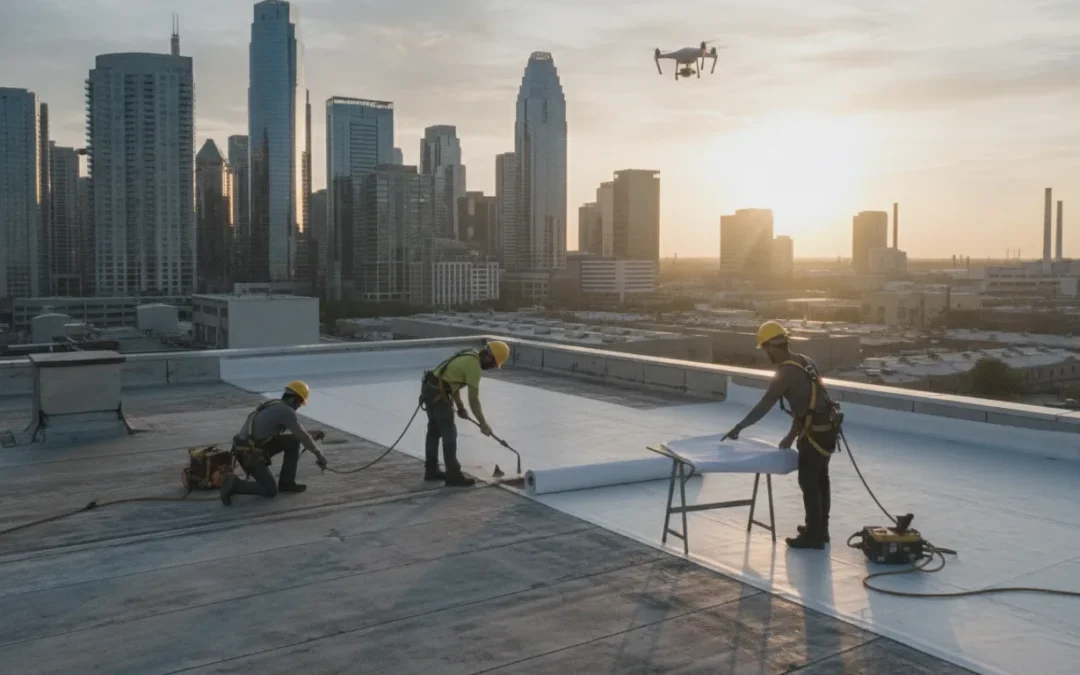
Commercial roof damage rarely arrives with a convenient warning. A loose fastener, clogged drain, open seam, or damaged flashing can allow moisture into the roofing system long before anyone notices a ceiling stain. By the time water appears inside, insulation, decking, walls, inventory, or electrical components may already be affected. Prompt commercial roof repair can help limit the damage and prevent a small issue from becoming a major interruption. The right solution depends on the roof’s material, age, drainage, weather exposure, and overall condition. For businesses in the Poconos, Lehigh Valley, and surrounding counties, understanding these factors can make it easier to choose practical repairs and a qualified local roofing team.
Key Takeaways
- Respond to roof problems early: Stains, standing water, damaged flashing, loose materials, and musty odors may indicate hidden moisture or structural damage.
- Base the solution on a complete inspection: A professional should assess the roofing material, drainage, insulation, decking, seams, penetrations, and rooftop equipment before recommending repairs or replacement.
- Choose a contractor with proven credentials: Prioritize a licensed, bonded, and insured local roofer that provides in-house crews, detailed estimates, warranties, storm assistance, and experience with Northeast Pennsylvania commercial properties.
Commercial Roofing Systems and Repair Needs
Commercial roofs come in several designs, and each one has different repair needs. A flat membrane roof may struggle with ponding water and open seams, while a metal roof may develop corrosion, loose fasteners, or movement around panel joints. Shingle and stone-coated steel systems can also experience damaged courses, failed flashing, and leaks around penetrations.
The roof’s age, installation quality, drainage design, insulation, and rooftop equipment all affect how damage spreads. A small opening near a vent or curb can allow water to reach insulation and decking before anyone notices an interior stain. Water can also travel beneath a membrane, causing the visible leak to appear far from the original source.
That is why commercial roof repairs should begin with a complete inspection instead of a quick patch based only on where water appears inside the building. An inspection should evaluate the roof surface, seams, flashing, drainage components, penetrations, insulation, and decking.
MNM Roofing Professionals provides commercial roofing services throughout Northeast Pennsylvania, including the Poconos, Lehigh Valley, and surrounding counties. Its licensed, bonded, and insured in-house team works with several commercial roofing materials and can help property owners determine whether a targeted repair, restoration, or replacement makes sense.
Flat and low-slope roofs: drainage, ponding, and membrane damage
Flat and low-slope roofs depend on carefully planned drainage. Drains, scuppers, gutters, and roof slopes must move water away from the building before it collects. When a drain becomes clogged or the roof surface settles, ponding water may remain for days after rainfall. Over time, the added weight and moisture can weaken membranes, seams, insulation, and roof decking.
Common damage includes cracks, punctures, open seams, deteriorated coatings, and membrane separation. Water may also travel beneath the surface, making the visible leak appear far from the actual entry point. Research on common commercial roof problems notes that leaks on flat roofs can contribute to interior damage, mold growth, and structural problems.
A commercial roofer should inspect the full drainage path, not only the stained ceiling below. Repairs may involve clearing drains, sealing damaged areas, restoring membrane sections, correcting flashing, or replacing wet insulation and decking.
TPO, EPDM, rubber, and rolled roofs: seams, punctures, and shrinkage
TPO, EPDM, rubber, and rolled roofing systems use flexible membranes to protect commercial buildings from rain, snow, and ultraviolet exposure. Their performance depends heavily on properly sealed seams and secure edges. Foot traffic, maintenance work, falling branches, and rooftop equipment can puncture or tear the membrane. Shrinkage may pull the material away from walls, curbs, or flashing, creating openings where water can enter.
TPO systems are known for UV resistance and energy efficiency, while EPDM and other rubber membranes offer flexibility across changing temperatures. Still, every membrane requires regular inspection. Commercial roofing guidance explains that timely maintenance helps these systems remain durable and reduces the risk of leaks, mold, and damage to interior property.
Repairs may include cleaning and resealing seams, applying compatible patches, replacing damaged membrane sections, securing perimeter details, or addressing shrinkage around penetrations. Using compatible materials matters because an incorrect sealant or patch can fail prematurely.
Built-up and modified bitumen roofs: blisters, cap sheets, and moisture
Built-up roofing, often called tar-and-gravel roofing, contains multiple layers of bitumen and reinforcing fabrics. Modified bitumen systems use asphalt-based membranes designed to provide flexibility and weather resistance. Both systems can offer dependable protection, but repairs require attention to each layer rather than a surface-only patch.
Blisters may form when moisture or air becomes trapped beneath the membrane. Open seams, damaged cap sheets, loose gravel, and soft areas can also expose the underlying layers to water. If moisture reaches the insulation or decking, the repair may involve more than replacing the top surface. A roofing professional may need to remove compromised materials, dry the area, and rebuild the affected section.
According to information on built-up roofing systems, the layered design creates a strong barrier against weather, but damage to one part of that assembly can affect the layers below. An inspection should identify whether the issue is isolated or part of a broader moisture problem.
Metal roofs: thermal movement, corrosion, panels, and fasteners
Commercial metal roofs expand and contract as temperatures change. This thermal movement can stress panel seams, fasteners, flashings, and penetrations. Over time, fasteners may loosen, washers may deteriorate, and sealants may crack. Panels exposed to persistent moisture, road salt, or damaged coatings can also develop rust and corrosion.
Storms may dent panels, lift edges, or pull sections away from their supports. Water can then enter through holes around fasteners, failed seams, or damaged flashing. Drainage complexity can make the problem worse, especially where roof sections meet walls, curbs, gutters, or other roof planes. Commercial metal roof repair guidance identifies thermal movement, corrosion, severe weather, and drainage as common concerns for these systems.
Depending on the damage, repairs may involve replacing fasteners, resealing joints, treating corrosion, replacing individual panels, or repairing flashing. A contractor should also check whether surrounding panels have shifted or whether water has reached insulation and decking.
Shingle and Tilcor stone-coated steel roofs: damaged courses and flashing
Commercial buildings with sloped sections may use asphalt shingles or Tilcor stone-coated steel roofing. Shingle repairs often involve missing, lifted, cracked, or torn courses. Wind and hail can damage exposed surfaces, while aging materials may lose granules and become more vulnerable to water. A repair should match the existing system as closely as possible and address the underlying cause of the damage.
Tilcor stone-coated steel roofs can provide durable protection, but individual panels, fasteners, ridges, valleys, and flashing still need inspection after severe weather. Leaks commonly develop around chimneys, vents, skylights, wall transitions, and other penetrations. Failed flashing can direct water beneath otherwise intact roofing materials.
Poor installation or low-quality repairs can shorten a roof’s service life and lead to repeated problems. Commercial roof maintenance information points to improper installation as a common cause of premature failure. A qualified contractor should evaluate the damaged area, adjacent courses, flashing, underlayment, and ventilation before recommending a repair.
How age, weather, insulation, and rooftop equipment affect repairs
A commercial roof rarely fails because of one factor alone. Age can make membranes brittle, reduce shingle performance, weaken sealants, and increase corrosion. Northeast Pennsylvania weather adds repeated exposure to wind, hail, snow, ice, freeze-thaw cycles, and heavy rain. These conditions can turn a minor defect into a larger opening over time.
Insulation also affects the repair decision. Wet insulation can reduce energy efficiency and hold moisture against the roof deck, even when the exterior damage looks small. Rooftop units, vents, pipes, antennas, and maintenance paths create additional penetrations and traffic areas that need regular inspection. Equipment work performed without proper protection can puncture membranes or damage flashing.
Roofing maintenance issues often remain hidden until they affect ceilings, inventory, electrical systems, or building operations. Roof maintenance research notes that slow leaks and sudden membrane failures can create expensive disruptions for property managers and facility teams. A thorough assessment should document visible damage, moisture, insulation, decking, drainage, and equipment-related concerns before repair work begins.
Signs Your Commercial Roof Needs Repair
Commercial roof damage often starts small. A failed seal, minor puncture, or clogged drain may not seem urgent, but moisture can move through the roofing system and affect insulation, decking, ceilings, inventory, and equipment. By the time you notice a leak inside the building, the damage may extend beyond the original opening.
Watch for changes both inside and outside the property. Stains, musty odors, standing water, damaged flashing, and loose roofing materials all deserve attention. After severe weather, inspect the building from the ground and check interior spaces for new signs of moisture. Do not walk onto the roof unless you are trained and properly equipped, since wet surfaces, weak decking, and hidden damage can create serious safety risks.
The right repair depends on the roofing material, the location of the damage, and the condition of the surrounding system. A professional inspection should include the membrane or roof surface, drainage components, flashing, insulation, decking, penetrations, and rooftop equipment. MNM Roofing Professionals provides commercial roofing services throughout Northeast Pennsylvania, including the Poconos, Luzerne County, and the Lehigh Valley.
Interior leaks, water stains, mold, and damaged ceilings or insulation
Water stains on ceilings or walls are common signs that a commercial roof needs attention. Look for yellow or brown marks, peeling paint, bubbling finishes, damp ceiling tiles, and moisture near exterior walls. A drip inside the building may not line up with the roof opening above it. Water can travel along decking, insulation, beams, and other materials before entering an occupied space.
A musty odor, visible mold, wet insulation, or damaged ceiling tiles also points to unwanted moisture. Wet insulation may lose its effectiveness and conceal deterioration above the ceiling. Place containers under active drips and move inventory or equipment away from the affected area. Then arrange a professional inspection. This commercial roof repair guidance explains how leaks can damage both the roof and the building interior.
Ponding water, clogged drains, scuppers, gutters, and downspouts
Standing water that remains after rainfall is a serious warning sign on a commercial roof. Ponding may result from blocked drains, damaged membranes, inadequate slope, settled insulation, clogged scuppers, or problems with connected gutters and downspouts. The extra weight can strain the roof system, while prolonged moisture may weaken materials and contribute to leaks.
Check for water collecting around drains, behind rooftop equipment, or along low roof edges. Leaves, branches, sediment, and other debris can restrict drainage, so qualified personnel should clear these areas as part of regular maintenance. Downspouts should direct water away from the building and foundation. MNM can also help address drainage needs through commercial gutter installation.
Blisters, punctures, tears, open seams, and membrane separation
Commercial membrane roofs can develop blisters, raised areas, punctures, tears, and open seams as they age. Foot traffic, severe weather, dropped tools, equipment work, and sharp objects can all damage the surface. Blisters may indicate trapped air or moisture beneath the membrane, while a puncture can create a path for water even when the opening looks small.
Separated or lifted seams are especially important to address because water can move below the membrane and affect a wider area. Avoid covering the damage with household caulk, tape, or an unapproved patch. Incompatible materials may fail quickly or complicate a later repair. A roofing professional can determine whether the area needs localized patching, seam restoration, or replacement of a larger section. Commercial roof repair information identifies ponding water, punctures, and tears as common concerns.
Loose flashing, failed sealants, exposed fasteners, rust, and corrosion
Flashing protects transitions around walls, curbs, vents, pipes, skylights, penetrations, and roof edges. When it pulls away, bends, cracks, or develops rust, water may enter through one of the roof’s most vulnerable areas. Deteriorated sealant around joints and penetrations can create similar openings, particularly after repeated exposure to rain and freeze-thaw cycles.
On metal roofs, watch for loose or missing fasteners, rust spots, corroded panels, and open laps. Fasteners that back out can leave holes, while corrosion may spread beneath protective coatings and weaken the panel. These issues require more than a quick surface patch. The contractor should identify the cause of the failure and use materials compatible with the existing roof. This commercial repair guide also recommends prompt attention to damaged flashing.
Sagging, soft decking, and other structural warning signs
A sagging roof area, uneven surface, or soft spot may indicate moisture-damaged insulation, deteriorated decking, or an issue with the supporting structure. Inside the building, you may notice a dipping ceiling, cracked finishes, unusual movement, or doors that no longer close properly near the affected area. These signs require prompt professional attention.
Do not walk across a visibly sagging or soft section. Water may have weakened the decking, making the surface unsafe for people and equipment. Keep employees and contractors away from the area, protect interior contents from leaks, and contact a commercial roofing professional. An inspection may include moisture detection and an evaluation of the roof deck, insulation, fasteners, and structural components. Commercial roof repair guidance also lists sagging areas and visible damage among important warning signs.
Wind, hail, snow, ice, and falling-debris damage
Severe weather can damage a commercial roof even when there is no immediate interior leak. High winds may lift membranes, loosen flashing, or remove shingles. Hail can bruise roofing membranes, crack surface coatings, and dent metal panels. Heavy snow and ice add weight, while freeze-thaw cycles can widen cracks and openings.
After a storm, look for displaced materials, dents, punctures, fallen branches, damaged gutters, and loose metal. Check ceilings and upper walls for new stains, but avoid climbing onto the roof during unsafe conditions. Take photographs from the ground when possible, save receipts for temporary protection, and contact your contractor or insurance provider. MNM offers emergency storm-damage repairs and insurance-claim assistance for eligible commercial properties.
How small leaks and delays threaten operations and property value
A small leak can saturate insulation, stain ceilings, damage electrical components, and expose inventory to moisture. If it continues, water may spread beneath the roof surface, making the original opening difficult to locate. Mold, damaged finishes, interrupted operations, and tenant complaints can add costs that far exceed the initial repair.
Delaying repairs may also shorten the roof’s useful life and affect the property’s condition during an appraisal, sale, lease renewal, or insurance review. Prompt documentation creates a clearer record of when the problem appeared and how it was addressed. If you notice recurring leaks, ponding water, or interior moisture, request a written assessment before the issue grows. This commercial roof repair resource explains why even minor leaks deserve timely attention.
Commercial Roof Repair Services
Commercial roof repair starts with finding the source of the problem, not simply covering the first visible leak. Water can travel beneath roofing materials before appearing on a ceiling, wall, or floor. Damage around drains, flashing, seams, vents, and rooftop equipment can also remain hidden from view. A detailed inspection helps property owners address the cause, prioritize urgent work, and reduce disruption to daily operations.
MNM Roofing Professionals provides commercial roofing services throughout Northeast Pennsylvania, including the Poconos, Lehigh Valley, and surrounding counties. Its licensed, bonded, and insured in-house team repairs and replaces flat, rubber, rolled, metal, shingle, and Tilcor stone-coated steel roofing systems. The recommended service depends on the roof’s material, age, condition, and exposure to moisture, storms, foot traffic, and rooftop equipment.
Inspection, moisture detection, photos, and condition assessment
A commercial roof inspection should cover the entire system, including the roof surface, seams, edges, flashing, drains, scuppers, penetrations, vents, and equipment curbs. The inspector should also check accessible interior areas for water stains, mold, damaged ceilings, soft insulation, and other signs of moisture. These interior warning signs may appear before exterior damage becomes easy to spot, according to this commercial roof inspection guidance.
Photos and written notes create a useful record for property owners, insurance companies, and future maintenance planning. When appropriate, moisture detection methods can help identify wet insulation or concealed problem areas. The final assessment should explain which repairs require immediate attention, which items can be scheduled later, and whether the roof needs localized repairs, restoration, or replacement.
Patching, sealing, seam repair, and membrane restoration
Commercial roof repairs may include patching punctures, sealing cracks, repairing open seams, replacing damaged membrane sections, and restoring areas affected by weather or foot traffic. The right repair method depends on the roofing system and the location of the defect. Materials should be compatible with the existing roof so the repair bonds properly and does not create a new weak point.
Rubber and rolled roofs may need properly prepared membrane patches and sealed seams. Flat roof repairs may focus on separated membrane areas, damaged roofing felt, or defects around penetrations and edges. A patch alone may not solve the issue if trapped moisture or movement is affecting the surrounding materials. Prompt repairs to minor defects can help prevent larger failures, as IKO’s commercial roofing guide explains.
Flashing, penetrations, roof edges, vents, and equipment-curb repairs
Flashing protects some of the most vulnerable parts of a commercial roof. It directs water away from walls, parapets, vents, skylights, roof edges, pipes, HVAC units, and equipment curbs. Repairs may include replacing corroded metal, securing lifted sections, resealing joints, and rebuilding flashing that no longer directs water away from the structure.
A contractor should inspect sealants around every roof penetration because cracked or deteriorated sealant can allow water to enter below the surface. Rust, split seams, loose flashing, and failed sealant deserve prompt attention, even when the main roof field looks intact. The repair should also account for movement around rooftop equipment and use materials that work with the existing roof system. Commercial roof repair guidance identifies damaged flashing as an issue that should be addressed quickly.
Metal panels, fasteners, insulation, membranes, and roof-deck replacement
Metal roof repairs can involve replacing damaged panels, securing or replacing fasteners, sealing penetrations, repairing seams, and treating corrosion. Metal expands and contracts as temperatures change, which can place stress on fasteners and sealants. Severe storms, salt exposure, drainage problems, and standing water can accelerate corrosion or create openings around panel connections.
The visible roof surface is only one part of the system. An inspection should also check the insulation and roof deck beneath it. Wet insulation can reduce the roof’s performance, while a soft or deteriorated deck may not safely support new materials. If underlying damage is found, the repair plan should identify which layers require replacement and why. Metal roof repair information offers further insight into movement, corrosion, and fastener-related problems.
Drainage corrections, gutter and downspout repairs, and ponding solutions
Commercial roofs need a reliable way to move water away from the building. Clogged drains, blocked gutters, damaged scuppers, undersized downspouts, and poor roof slope can leave water standing on the surface. Persistent ponding adds weight to the roof and can worsen leaks, damage insulation, and contribute to deterioration of the roof deck.
Repairs may include clearing drains, replacing damaged gutters, repairing downspouts, improving flashing around drainage points, or correcting areas where water repeatedly collects. A contractor may recommend tapered insulation or another solution when the roof does not drain properly. Patching the roof without addressing the drainage problem often allows the same leak to return. This commercial roof drainage guidance explains why standing water should receive prompt attention.
MNM Roofing Professionals also provides gutter installation services for commercial properties that need new or better-coordinated drainage components.
Temporary protection and emergency storm repairs
Storm damage can leave a commercial building vulnerable to rain, wind, and additional property damage. Loose materials, punctures, fallen branches, damaged flashing, and drainage failures may threaten inventory, equipment, employees, customers, and normal business operations. Temporary protection can reduce exposure when permanent repairs cannot begin immediately.
Emergency service may include tarping, securing loose materials, closing openings, removing dangerous debris, or placing temporary patches over active leaks. After the site is safe, the roofing contractor can document the damage and prepare a permanent repair plan. Employees should not climb onto a damaged roof, especially after high winds, hail, heavy snow, or ice. Contacting a qualified contractor promptly can help limit further damage and create a clearer record of the event.
Insurance-claim documentation and warranty-compliant repairs
A commercial roofing contractor can help organize information for an insurance claim, including inspection photos, descriptions of damaged areas, repair recommendations, and written estimates. Property owners should also keep storm reports, maintenance records, invoices, warranty documents, and communications with the insurer. These records can help distinguish sudden storm damage from long-term wear or deferred maintenance.
Repairs should follow the requirements of the existing roofing system’s warranty. Incompatible materials, inadequate surface preparation, or an unapproved installer may create warranty concerns. Ask for a written scope that identifies the damaged components, repair methods, materials, workmanship coverage, and manufacturer requirements. MNM Roofing Professionals offers insurance-claim assistance and personally supervised estimates, giving property owners a clearer understanding of the recommended work before repairs begin.
Commercial Roof Repair Costs
Commercial roof repair costs vary because every building, roofing system, and damage situation is different. A small puncture in an accessible membrane may require a focused repair, while widespread leaks, saturated insulation, or deteriorated decking can turn the project into a partial replacement.
The most reliable way to understand your potential cost is to schedule a professional inspection and request a written scope of work. The contractor should identify the roof system, locate visible and hidden damage, explain the recommended solution, and separate necessary repairs from optional improvements.
Local conditions can also affect commercial roofs in Northeast Pennsylvania. Snow, ice, freeze-thaw cycles, high winds, and summer storms may damage roofing materials or worsen existing weaknesses. MNM Roofing Professionals provides commercial roofing services throughout the Poconos, Lehigh Valley, and surrounding counties, with estimates personally overseen by its team.
Before approving work, ask what the estimate includes, how concealed damage will be handled, and whether the proposed repair is intended to last temporarily or provide a longer-term solution. Comparing complete scopes of work is more useful than choosing a contractor based on the lowest starting price.
Roof size, material, age, and damage severity
The size of a commercial roof affects the amount of material, labor, equipment, and time required for a repair. Square footage is only one part of the estimate, however. Roofing materials have different installation methods, repair products, service lives, and labor requirements.
A contractor may approach a punctured rubber membrane differently than a corroded metal panel or a damaged shingle section. The roof’s age matters, too. A newer system with isolated damage may need only a targeted repair, while an older roof with recurring leaks may require restoration or replacement planning.
Damage severity can have the greatest effect on cost. A failed sealant joint may be relatively straightforward to correct, while damaged flashing, insulation, or roof decking requires additional work. The visible leak location may not be the actual source, since water can travel beneath the roof surface before entering the building. A professional inspection helps identify the full extent of the problem.
Access, labor, safety equipment, roof design, and operating conditions
A commercial roof that is easy to access generally requires less preparation than one on a tall, complex, or tightly confined building. Contractors may need lifts, ladders, staging, fall-protection systems, or additional safety equipment before repairs can begin. These requirements affect both labor and project timing.
Roof design can add further complexity. Multiple levels, steep sections, unusual edges, skylights, vents, rooftop units, and other penetrations may require extra planning and careful movement across the roof. The contractor must account for each obstacle while protecting workers, building occupants, and equipment.
Operating conditions also affect the scope. Repairs may need to be scheduled around employees, customers, deliveries, tenants, inventory, or sensitive machinery. Some businesses need phased work to remain open during construction. A detailed plan can reduce disruption, establish safe work zones, and clarify when different areas of the property will be accessible.
Drainage, insulation, roof-deck damage, and hidden moisture
Drainage problems can create repair needs even when the roof membrane looks intact. Clogged drains, blocked scuppers, damaged gutters, and poor slope can leave water standing on the roof. Over time, ponding may contribute to membrane deterioration, mold, mildew, insulation damage, and leaks inside the building.
Moisture can also travel beneath the roof surface, making the visible damage smaller than the underlying problem. Saturated insulation may lose its effectiveness and add weight to the roofing assembly. If water reaches the roof deck, sections may soften, rot, or corrode, depending on the deck material.
A thorough inspection may include moisture detection, targeted openings, interior review, and documentation of drainage conditions. Correcting the problem could require replacing wet insulation, repairing the deck, improving drainage, or restoring the membrane. These steps can increase the estimate, but they may prevent recurring leaks and additional interior damage. Businesses can learn more about the risks of ponding water through this commercial roof repair resource.
Emergency timing, weather, and after-hours work
Storm damage can create urgent problems for a commercial property. Wind may lift roofing materials, hail can puncture surfaces, and falling branches can damage membranes, panels, flashing, or rooftop equipment. Active leaks may affect ceilings, insulation, inventory, electrical components, and occupied work areas.
Emergency repairs may cost more than scheduled maintenance because the contractor must respond quickly, work around unsafe weather, or provide temporary protection before permanent repairs are possible. After-hours work may also involve additional labor when crews must coordinate with building access rules, tenants, security staff, or ongoing business operations.
A temporary tarp or emergency patch can limit water intrusion, but it should not replace a complete follow-up inspection. Once conditions are safe, the contractor should document the damage, check for hidden moisture, and provide a plan for permanent repairs. MNM Roofing Professionals offers emergency storm-damage assistance and insurance-claim support for eligible commercial property owners.
Repair pricing per square foot versus total project cost
Commercial roofing estimates may use a per-square-foot price, particularly for larger repairs, restorations, or replacements. One industry source places fully installed commercial roof replacement costs at approximately $5.50 to $18.00 per square foot, depending on the system and project variables, according to this research on commercial roof cost factors. This range is not a quote for a specific property or a standard price for every repair.
A per-square-foot figure may not include mobilization, disposal, permits, equipment rental, safety systems, insulation, decking, flashing, drainage corrections, or interior protection. A smaller repair may also have a higher effective cost per square foot because setup, travel, and equipment represent a larger share of the project.
Ask whether the estimate includes materials, labor, cleanup, disposal, taxes, equipment, temporary protection, and anticipated allowances. Also confirm whether concealed damage could change the price. Comparing complete project totals and detailed scopes is more useful than comparing one isolated unit price.
What to include in a written commercial roof repair estimate
A written estimate should explain what the contractor found, what work is recommended, and how the proposed repair addresses the problem. Look for a description of the existing roof system, damaged areas, suspected leak sources, photos, measurements, and conditions that may affect the work.
The estimate should identify the materials and repair methods, such as membrane patches, seam treatment, flashing replacement, fastener work, insulation replacement, or roof-deck repairs. It should also state whether the work is temporary, permanent, or part of a broader restoration plan.
Review the labor and material costs, anticipated schedule, payment terms, warranty information, exclusions, cleanup responsibilities, and change-order process. Ask how concealed damage will be handled if the crew finds wet insulation or deteriorated decking after opening the roof. A qualified inspection can help identify the most cost-effective solution for the property, as explained in this commercial roofing inspection guide.
Repair, restoration, and replacement costs
A targeted repair is usually the narrowest option. It may involve sealing a penetration, replacing damaged flashing, patching a membrane, tightening fasteners, or correcting a small drainage issue. This approach can make sense when the roof is in generally good condition and the damage is limited to one or two areas.
Restoration covers a broader area. Depending on the roof system, it may include cleaning, reinforcing seams, applying coatings, replacing select materials, and improving drainage. Restoration can extend the useful life of an aging roof when the underlying deck and insulation remain sound.
Replacement is more extensive and may involve removing the existing system, repairing the deck, installing insulation, and adding a new roof assembly. It may be appropriate when the roof has widespread damage, recurring leaks, saturated insulation, or a short remaining service life. The right choice depends on the roof’s condition, budget, operating needs, and future plans for the building. Ask the contractor to explain why a repair, restoration, or replacement best fits the property.
How delays increase the final bill
A small leak can become a much larger repair when water continues entering the building. Moisture may spread through insulation, damage ceilings and walls, affect electrical components, or harm inventory and equipment. On the roof, continued exposure can worsen membrane separation, corrosion, wood deterioration, and roof-deck damage.
Delays can also create operating costs. A business may need to relocate employees, close part of a facility, protect merchandise, or interrupt production while water intrusion continues. Research on commercial roofing repair responsibilities notes that postponing repairs can lead to more extensive damage and greater expense.
If you notice a leak, ponding water, ceiling stain, or storm-related damage, document the condition and arrange an inspection promptly. Avoid walking on damaged areas unless it is necessary and safe. Early temporary protection and a clear repair plan can help limit additional damage while you wait for permanent work.
Financing options for eligible business owners
A major roof repair or replacement can place pressure on a business budget, especially when the work follows an unexpected storm. Some roofing contractors offer financing through third-party lenders, allowing eligible property owners to spread payments over time. Approval requirements, interest rates, terms, minimum project amounts, and available plans vary.
MNM Roofing Professionals offers financing options for eligible customers. Ask whether financing applies to repairs as well as replacements and what documentation the lender requires. Before signing, confirm the total repayment amount, payment schedule, interest rate, fees, and consequences of a late payment.
Financing should be considered alongside the roof’s expected service life and the cost of postponing the work. A lower initial payment may help with cash flow, but the agreement should fit the business’s budget and long-term plans. Request a detailed written estimate first, then compare the financed amount with the complete project scope. Roofing-specific financing is one option discussed in this guide to financing a new roof.
Repair or Replace Your Commercial Roof?
Choosing between commercial roof repair and replacement requires more than reacting to the first visible leak. A qualified contractor should evaluate the roof’s age, material, drainage, insulation, flashing, fasteners, membrane, and underlying decking. Depending on the findings, the best option may be a targeted repair, a restoration, a partial replacement, or a complete roof replacement.
A single problem does not automatically mean the entire roof has failed. However, delaying an inspection can allow moisture to spread through insulation and decking, damage interior finishes, encourage mold growth, and disrupt business operations. Early repairs are often more manageable when they address the source of the problem before it affects additional materials.
Weather conditions in Northeast Pennsylvania also play a role. Snow, ice, freeze-thaw cycles, wind, and heavy rain can expose weaknesses in a commercial roofing system. MNM Roofing Professionals provides commercial roofing services throughout the Poconos, Lehigh Valley, and surrounding counties. Its team can document the roof’s condition, identify urgent concerns, and explain how each option may affect the building’s service life and operating costs.
When targeted repairs make sense
Targeted repairs often make sense when the roof is generally sound and the damage is limited to one area. Common examples include a small puncture, damaged flashing, an open seam, a loose fastener, or a localized leak near a vent or equipment curb. A contractor may patch the affected section, replace damaged materials, reseal a penetration, or correct a drainage problem without disturbing the rest of the roof.
Regular inspections can help identify these concerns before they spread. If the membrane, insulation, and decking remain dry and structurally sound, a focused repair may protect the building while preserving the roof’s remaining service life. The contractor should locate the source of the leak, not simply repair the interior spot where water appeared. Moisture can travel beneath the roof surface, so a ceiling stain may be several feet away from the actual problem.
When restoration or partial replacement can extend roof life
Restoration or partial replacement may be appropriate when a roof has worn or damaged areas but still has a stable foundation. Restoration may include cleaning the surface, repairing seams and flashing, replacing damaged sections, and applying a compatible coating or membrane system. These steps can create a more continuous, weather-resistant surface without removing every part of the existing roof.
Partial replacement may be practical when damage is concentrated around rooftop equipment, a drainage area, or one section of the building. The contractor should verify that the new materials are compatible with the existing system and that transitions are properly sealed. Guidance on commercial flat roofing systems also emphasizes the importance of addressing damaged flashing, roofing felt, and other minor problems before they become more extensive.
When age, recurring leaks, or widespread damage favor replacement
Replacement becomes more likely when the roof is near the end of its expected service life, leaks continue after repeated repairs, or deterioration appears across several areas. A roof may also require replacement when insulation is saturated, the decking is soft, or the membrane shows widespread cracking, shrinkage, blistering, or separation.
Recurring leaks deserve careful attention because patching one area at a time may not correct a broader system failure. Moisture can damage insulation, ceilings, electrical components, inventory, and rooftop equipment. Widespread deterioration may also affect property value and create safety concerns for employees and visitors. A written condition assessment can help you compare the cost of continued repairs with the long-term value of a new roof system.
Why one leak does not always require full replacement
A leak requires prompt attention, but it does not always mean the entire commercial roof needs to be replaced. The source may be a damaged flashing detail, failed sealant joint, open seam, or puncture caused by foot traffic or falling debris. If the surrounding materials remain dry and structurally sound, a targeted repair or restoration may resolve the issue.
The important question is whether the leak is isolated or part of a larger pattern. Ask the contractor to inspect the surrounding roof area, test the insulation, examine the decking, and check for additional moisture. This process can help prevent an unnecessary replacement while still addressing hidden damage. A qualified professional should explain the expected service life of the repair and identify conditions that could make replacement more practical later.
Energy efficiency, insulation, and long-term operating costs
The lowest initial price is not always the lowest long-term cost. Wet, compressed, or insufficient insulation can make it harder to maintain comfortable indoor temperatures, increasing heating and cooling demands. During a replacement or major restoration, a contractor may recommend improving insulation, correcting drainage, or selecting a roof system that better fits the building’s use and exposure.
Material choice also affects operating expenses. Some TPO systems, for example, reflect more sunlight and can reduce heat absorption during warmer months. The right option depends on the roof’s slope, existing materials, insulation requirements, maintenance needs, and local weather. Compare expected service life, energy performance, repair needs, and warranty coverage alongside the installation price. A roofing professional can explain which improvements are likely to provide meaningful value for your property.
Warranty, building-code, insurance, and manufacturer requirements
Before approving repairs or replacement, ask how the proposed work may affect existing warranties and insurance requirements. Many manufacturers require documented inspections and maintenance to keep roof-system warranties valid. Repairs should use compatible materials and follow the manufacturer’s installation instructions. Improper patching or unauthorized alterations can create complications when warranty service is needed.
Building codes and permit requirements may also apply, especially when work involves structural decking, insulation, drainage, rooftop equipment, or a complete replacement. Your contractor should explain which permits and inspections the project requires. If the damage resulted from a storm, keep photographs, inspection reports, invoices, and records of temporary protection for your insurance claim. MNM Roofing Professionals provides commercial storm-damage assistance and can help property owners organize documentation for the claims process.
How to compare written repair and replacement recommendations
Request a written recommendation from every contractor instead of comparing only the final price. Each proposal should describe the roof system, damaged areas, suspected cause, proposed materials, preparation work, drainage corrections, insulation or decking replacement, labor, cleanup, and exclusions. It should also state whether the work involves a repair, restoration, partial replacement, or complete replacement.
Compare the expected service life, warranty terms, project schedule, payment requirements, and maintenance recommendations. Confirm whether the price includes permits, disposal, safety equipment, temporary protection, flashing, penetrations, and change orders. Ask why the contractor recommends a particular option and what could happen if you postpone the work. MNM Roofing Professionals’ family-owned team provides estimates and oversees projects with licensed, bonded, and insured in-house crews, giving property owners a clear point of contact throughout the work.
Choose a Reputable Commercial Roofing Contractor
The contractor you choose can affect your building’s safety, operating costs, insurance coverage, and roof life. A low bid may seem attractive, but it can become costly if the scope is vague, temporary patches conceal larger problems, or an inexperienced crew causes additional damage. Take time to compare contractors before work begins, especially after storm damage when quick decisions can leave important details unchecked.
Look for a roofing company that explains its findings clearly, provides a written scope, and has experience with commercial properties like yours. The contractor should understand Northeast Pennsylvania conditions, including heavy snow, ice, freeze-thaw cycles, high winds, and severe summer storms. MNM Roofing Professionals provides commercial roofing repairs and replacements for businesses throughout the Poconos, Lehigh Valley, and surrounding counties.
A thorough selection process can help you avoid surprise costs and communication problems. Before signing, confirm the contractor’s qualifications, repair methods, warranties, safety procedures, and expectations for the project.
Verify licensing, bonding, insurance, and required permits
Ask for current proof of licensing, general liability insurance, workers’ compensation coverage, and bonding before signing a contract. These protections can reduce your exposure if a worker is injured, your property is damaged, or the contractor fails to complete the agreed work. Do not rely on a verbal assurance. Review the documents and confirm that coverage remains active throughout the project.
Ask who will handle permits and inspections, too. Requirements may vary by municipality, project type, and repair scope. A reputable contractor should explain which permits apply, identify who will obtain them, and include related costs in the estimate. MNM Roofing Professionals is a licensed, bonded, and insured roofing company serving commercial property owners across Northeast Pennsylvania.
Confirm experience with your roofing system
Commercial roofs require different repair methods depending on their materials and design. A low-slope membrane roof is not repaired the same way as a metal, rubber, rolled, shingle, or stone-coated steel system. Ask whether the contractor has worked on your specific roof type and request examples of similar projects.
Also ask how the proposed materials will match the existing roof. Incompatible sealants, patches, or coatings may fail early or affect manufacturer coverage. An experienced roofer should explain whether the issue involves a failed seam, damaged flashing, exposed fastener, puncture, drainage problem, or another cause. Review MNM’s commercial roofing systems and services to learn more about the materials the company repairs and installs.
Look for Northeast Pennsylvania weather and storm-repair expertise
Local weather can place repeated stress on a commercial roof. Snow and ice add weight, freeze-thaw cycles widen cracks, wind can lift flashing, and severe storms may puncture membranes or damage metal panels. A contractor familiar with Northeast Pennsylvania should look beyond the visible leak and inspect roof edges, seams, drainage areas, penetrations, insulation, and decking.
Storm-repair experience also matters when you need to document damage for an insurance claim. Ask whether the contractor provides dated photographs, written findings, repair recommendations, and an itemized scope. These records can make discussions with your insurance company more organized. MNM Roofing Professionals offers emergency storm-damage repairs and insurance-claim assistance for eligible commercial projects.
Ask whether the contractor uses in-house crews or subcontractors
Find out who will perform the work on your building. A contractor with an in-house crew has more direct control over training, workmanship, scheduling, safety practices, and communication. If subcontractors will be involved, ask which portions of the project they will handle, whether they are insured, and who will supervise them.
You should also have one clear point of contact throughout the repair. That person should be able to answer questions, provide progress updates, explain unexpected conditions, and manage approved changes. MNM Roofing Professionals completes commercial roofing work with its licensed, insured in-house team rather than subcontracting the project, giving property owners direct access to the company overseeing the repair.
Compare inspection findings, scopes, prices, and timelines
When reviewing estimates, compare more than the total price. Each proposal should describe the damaged areas, repair materials, preparation work, access requirements, cleanup, warranties, and expected schedule. A lower bid may leave out insulation replacement, drainage corrections, protective measures, or damaged decking that another contractor included.
Ask each roofer to explain the cause of the problem and how the proposed repair addresses it. Compare photographs and moisture findings when available, then ask what could happen if the work is delayed. Confirm whether the timeline depends on weather, material availability, tenant access, or business hours. A detailed written scope makes proposals easier to compare and can prevent disagreements after work begins.
Review workmanship warranties, manufacturer coverage, references, and reviews
Ask for the terms of both the workmanship warranty and any manufacturer warranty. Find out what each warranty covers, how long it lasts, who handles claims, and whether inspections or maintenance are required. Some manufacturers require documented care to keep coverage valid, so ask how the contractor will help you meet those conditions.
References can offer insight into communication, jobsite cleanliness, schedule management, and the contractor’s response to unexpected issues. Request references for commercial properties with a similar roof system or project size. Then read reviews across multiple sources and look for consistent patterns, rather than focusing on a handful of comments. A reputable contractor should provide clear warranty information before you commit.
Ask about safety, communication, cleanup, and change orders
Commercial roof repairs can affect employees, customers, tenants, inventory, vehicles, and building access. Ask how the crew will control fall hazards, secure tools and materials, protect entrances, and separate work areas from occupied spaces. The contractor should have safety procedures that reflect the requirements outlined by OSHA for roofing work.
Confirm how the crew will handle debris, nails, damaged materials, and daily cleanup. Communication should also be part of the plan. Ask how often you will receive updates, who to contact with urgent concerns, and how weather delays will be reported. If workers discover wet insulation, soft decking, or concealed damage, the contractor should document the condition, explain your options, and receive written approval before adding work or cost.
Questions to ask before signing a commercial roof repair contract
Before signing, ask:
- What caused the damage, and how did you confirm it?
- Which roof areas and materials are included in the scope?
- What preparation, tear-out, insulation, decking, or drainage work is included?
- Who will perform and supervise the repairs?
- Are permits, safety equipment, building protection, and cleanup included?
- What are the expected start date and completion timeline?
- How will weather delays or concealed damage affect the schedule?
- What warranties apply to labor and materials?
- Will the repairs preserve manufacturer and insurance requirements?
- How will change orders be documented and approved?
- What payment schedule, financing options, and final documents are available?
Written answers give you a stronger basis for comparing contractors. Ask for a copy of the final contract, scope, warranty terms, insurance documentation, and payment schedule before work begins. Property owners who want to discuss roof condition, repair options, or a free commercial roofing estimate from MNM Roofing Professionals can start with a detailed consultation.
The Commercial Roof Repair Process
Commercial roof repairs involve more than locating a leak and covering it with a patch. Your contractor must evaluate the roofing system, identify the source of the problem, account for weather and building use, and protect everyone working in or around the property. A clear repair process helps reduce disruption and gives you a reliable record of the work.
MNM Roofing Professionals begins with an on-site evaluation and a conversation about your concerns, the building’s history, and any recent storm damage. The team repairs flat, rubber, rolled, metal, shingle, and Tilcor stone-coated steel roofing systems. As a licensed, bonded, and insured contractor serving Northeast Pennsylvania, MNM uses in-house crews instead of subcontracting the work. Review the company’s commercial roofing services to learn more about the repair process and available support.
Start with a consultation, inspection, photos, and documentation
The process starts with a consultation and detailed roof inspection. The contractor should examine the roof surface, seams, flashing, drains, penetrations, equipment curbs, edges, gutters, and interior areas beneath the suspected leak. They may also check for soft decking, trapped moisture, ponding water, damaged insulation, and signs that water has traveled away from its original entry point.
Photos and written notes document the roof’s condition before work begins. This record can help explain the recommended repair and support insurance claims, warranty questions, and future maintenance. If a storm caused the damage, photograph hail impacts, fallen branches, wind damage, interior stains, and damaged contents. The inspection should clarify whether the property needs a targeted repair, partial replacement, restoration, or a larger roofing project.
Approve the written scope, estimate, and schedule
Before work begins, request a written scope that identifies the damaged areas, materials, repair methods, preparation, cleanup, warranty coverage, and exclusions. The estimate should separate labor, materials, disposal, equipment, and potential costs for concealed damage. It should also state whether taxes, permits, inspections, or temporary protection are included.
The schedule should list the expected start date, estimated duration, working hours, weather limitations, and responsibilities for the property owner. If the business will remain open, discuss material staging, employee access, customer traffic, and delivery routes. A detailed commercial roof repair estimate gives everyone a shared reference point and makes proposed changes easier to evaluate.
Keep important details in writing rather than relying on verbal promises. A signed agreement provides a clear record if the scope, materials, timeline, or price changes during the project.
Clarify landlord, tenant, and property-owner responsibilities
Commercial properties often involve landlords, tenants, property managers, and building owners. Each party may have different obligations under the lease or management agreement. For example, a tenant may need to report leaks and handle routine maintenance, while the owner may be responsible for structural repairs, roof replacement, code compliance, and insurance coordination.
Review the lease, property management agreement, and insurance policy before approving work. Confirm who can authorize repairs, who receives updates, and who pays the contractor. If multiple tenants occupy the building, designate one primary contact to coordinate access and distribute schedule information.
Everyone should report water stains, dripping, damaged ceiling tiles, mold-like odors, or other warning signs promptly. Clear communication about responsibilities prevents delays and reduces the chance that a small roofing problem will cause avoidable damage or disagreement.
Coordinate site access, tenants, inventory protection, and business continuity
Roofing crews need safe access to the building, roof, loading areas, electrical connections, and material staging locations. Share information about locked gates, security procedures, delivery schedules, restricted areas, alarm systems, and rooftop equipment. Notify tenants and employees about noise, parking changes, roof access, and temporary closures before the project begins.
Protect inventory, furniture, electronics, and sensitive equipment beneath the repair area. Depending on the work, items may need to be moved, covered, or relocated temporarily. Businesses with customer traffic, manufacturing operations, medical services, or strict delivery schedules may benefit from repairs completed in phases or during less active hours.
Create a communication plan that identifies who receives updates and how urgent issues will be reported. Regular communication helps the contractor coordinate the work while reducing interruptions for employees, customers, tenants, and suppliers.
Manage work zones, fall protection, noise, debris, and safety
Commercial roof repair creates hazards for workers and building occupants, so the work area needs clear controls from the start. The contractor should establish safe access points, restrict unauthorized entry, secure ladders and equipment, and use appropriate fall-protection practices. OSHA provides fall-protection guidance for work performed near roof edges and other fall hazards.
Work zones should keep employees, customers, tenants, and visitors away from tools, materials, open roof areas, and falling debris. Discuss how the crew will control noise, odors, dust, hot materials, discarded roofing, and deliveries. If repairs occur above occupied rooms, interior spaces should be protected and walkways kept clear.
At the end of each work period, materials and equipment should be secured. Debris must not block entrances, fire lanes, drains, or emergency exits. Ask how the crew will collect loose fasteners and other small debris that could damage vehicles, tires, landscaping, or equipment.
Plan for weather delays, temporary repairs, and project updates
Weather can interrupt commercial roof repairs, particularly in Northeast Pennsylvania, where rain, wind, snow, ice, and freeze-thaw conditions can affect exterior work. Some materials also require dry surfaces or suitable temperatures for proper adhesion and sealing. Ask how weather may affect the schedule and what protection will be used if conditions change.
If permanent repairs cannot begin immediately, temporary measures may help limit water intrusion. These can include tarps, temporary membrane patches, sealants, or other materials suited to the roofing system. Temporary protection is not always a long-term solution, so confirm how long it should last, what it covers, and whether its cost applies to the final repair.
Request regular project updates, including photos when roof access is limited. Updates should identify weather delays, newly discovered damage, schedule changes, and any areas that need attention. Promptly addressing ponding water and exposed roof sections helps limit damage to insulation, decking, walls, and interior finishes.
Complete repairs, quality checks, and change-order approvals
The crew should follow the approved scope and use materials compatible with the existing roofing system. Depending on the damage, repairs may include patching membranes, sealing seams, replacing flashing, securing metal panels, installing fasteners, repairing roof edges, replacing insulation, or addressing damaged decking.
Quality checks should occur throughout the project, not only after the crew finishes. The contractor should confirm that repaired areas are sealed, flashing is secure, penetrations are protected, and water can move toward functioning drains, scuppers, gutters, and downspouts. Transitions between roof sections and materials deserve particular attention.
Hidden damage may require a change order. Before approving additional work, request a written explanation, supporting photos, the recommended solution, added cost, and schedule impact. Written approval keeps the project record accurate and reduces the risk of billing disputes or misunderstandings about the completed work.
Finish with an inspection, cleanup, warranty information, and maintenance recommendations
After the repairs are complete, schedule a final walkthrough with the contractor. Review the repaired areas, flashing, seams, drains, roof edges, penetrations, and locations where water entered the building. The crew should remove roofing debris, unused materials, packaging, and loose fasteners from the roof, work zones, and surrounding property.
Request final photos and copies of the completed scope, invoices, permits, product information, workmanship warranty, and manufacturer warranty documents. Ask what each warranty covers, how long it lasts, and which inspection or maintenance requirements could affect coverage. Store these records with your building and insurance documents.
The contractor should also recommend maintenance based on the roof’s material, age, drainage design, and exposure. Recommendations may include routine inspections, drain and gutter cleaning, flashing checks, and inspections after severe weather. MNM’s commercial roofing team can discuss practical maintenance steps for protecting your roof after repairs are finished.
Prevent Extensive Commercial Roof Repairs
Commercial roof repairs are usually less disruptive and less expensive when problems are found early. A small puncture, loose fastener, or clogged drain can worsen after repeated rain, snow, wind, and freeze-thaw cycles. Water may spread beneath a membrane or enter the insulation before a ceiling stain appears. By then, the roof deck, walls, inventory, and equipment may already be affected.
A practical maintenance plan combines scheduled inspections, prompt repairs, controlled roof access, and detailed records. This is especially important for businesses in Northeast Pennsylvania, where heavy snow, ice, strong winds, and changing temperatures can place added stress on commercial roofing systems.
MNM Roofing Professionals provides commercial roofing services throughout the Poconos, Lehigh Valley, and surrounding communities. Its licensed, bonded, and insured in-house crews can evaluate your roof, identify priority repairs, and help you plan maintenance around your business operations.
Schedule inspections twice a year and after severe weather
Schedule a professional inspection at least twice a year, ideally in spring and fall. A spring inspection can uncover damage caused by snow, ice, and winter freeze-thaw cycles. A fall inspection gives you time to address weak areas before winter weather arrives.
Arrange an additional inspection after high winds, hail, heavy snowfall, or a major storm. Some damage is difficult to see from the ground, including lifted flashing, punctured membranes, loose metal panels, and damaged rooftop equipment. Ask the contractor for photographs and a written condition report so you can track changes over time.
Regular inspections do not automatically mean your roof needs replacement. They help you distinguish routine maintenance from urgent repairs and make informed decisions about your commercial property.
Clear drains, gutters, scuppers, and roof surfaces
Drainage problems are a common source of commercial roof damage. Leaves, branches, dirt, packaging materials, and other debris can block drains, scuppers, gutters, and downspouts. When water cannot drain properly, it may collect in low areas and place prolonged stress on the membrane, seams, insulation, and roof deck.
Include drainage components in your maintenance schedule, especially after fall leaf drop and major storms. Remove debris carefully, and do not allow untrained employees to walk on the roof or handle unfamiliar drainage systems. Some roofing surfaces are easily punctured, and unsafe access can lead to serious injuries.
If your property needs new or repaired drainage components, review MNM Roofing Professionals’ gutter installation services. Properly sized gutters and downspouts help direct water away from the roof edge, walls, entrances, and foundation.
Inspect flashing, seams, penetrations, fasteners, and rooftop equipment
Flashing and seams need close attention because they often appear where different roofing materials meet. Check areas around parapet walls, curbs, vents, skylights, pipes, HVAC units, and other roof penetrations. Look for gaps, lifted edges, cracked sealants, open seams, and signs of moisture beneath the roofing system.
Fasteners may loosen or corrode over time, particularly on metal roofs. Rooftop equipment can also damage the surface when technicians drag tools, drop materials, or work without protecting the roof. Coordinate HVAC, electrical, solar, and other equipment work with your roofing contractor so new penetrations and curbs are sealed correctly.
Avoid covering a suspected problem with caulk or roofing cement before identifying its cause. A temporary patch may hide a leak while moisture continues spreading below the surface. A professional can determine whether the area needs resealing, flashing repair, membrane work, or material replacement.
Watch for ponding water, vegetation, moisture, and interior changes
Check the roof and building interior for signs that water is not draining properly. Ponding water that remains after a reasonable drying period may indicate blocked drainage, inadequate slope, compressed insulation, or a sagging roof section. Vegetation growth can also signal persistent moisture and should be investigated.
Inside the building, watch for water stains, peeling paint, musty odors, mold, damp insulation, damaged ceiling tiles, and unusual changes in humidity. These signs may appear far from the entry point because water can travel along decking, insulation, beams, and other building components.
Record when you notice each change, including its location and the weather conditions at the time. Photos from the roof and interior can help a contractor trace the source. If active leaking appears near electrical equipment, keep people away from the area and request emergency service promptly.
Prepare for snow, ice, freeze-thaw cycles, wind, and heavy storms
Northeast Pennsylvania businesses need a maintenance plan that accounts for seasonal weather. Snow adds weight to a roof, while ice can block drains and form near edges and penetrations. Freeze-thaw cycles may enlarge small cracks as trapped water freezes and expands. High winds can lift flashing, loosen panels, and damage rooftop equipment.
Before winter, have the roof inspected for weak areas, blocked drainage, damaged flashing, and loose materials. Make sure snow-removal plans account for the roofing system, and avoid unapproved tools that can puncture membranes or scrape protective coatings. After a storm, check for interior leaks and visible exterior damage, even if the building appears to be operating normally.
If a storm causes immediate damage, secure the affected area and contact a contractor for temporary protection. MNM Roofing Professionals offers emergency storm-damage repairs and can help document damage for an insurance claim.
Limit unauthorized roof traffic and coordinate equipment work
Roof surfaces are not designed for unnecessary foot traffic. Employees, vendors, and equipment technicians may accidentally puncture membranes, crush insulation, damage coatings, or loosen roofing components. Create an access policy that identifies who may enter the roof and when.
Use designated walk paths where appropriate, and require contractors to coordinate with the property manager before beginning work. Anyone accessing the roof should understand its limitations and follow the site’s safety requirements. OSHA roofing guidance covers fall protection and other hazards associated with roof work.
Equipment work requires additional planning. HVAC technicians, electricians, and other vendors should protect the roof while moving tools and materials. After the work is complete, inspect new penetrations, curbs, conduit supports, and fasteners to confirm they are sealed and secure.
Keep repair, maintenance, insurance, and warranty records
Maintain a complete file for your commercial roof. Include inspection reports, repair invoices, photographs, maintenance dates, storm documentation, product information, insurance correspondence, and warranty paperwork. Record each repair’s location and scope, the materials used, and the contractor who completed the work.
These records help a roofing contractor understand the roof’s history and identify recurring problems. They can also support an insurance claim after storm damage and show that your business followed recommended maintenance practices. Some manufacturer and workmanship warranties include maintenance or documentation requirements, so review the terms before work begins.
Keep digital copies where property managers and other decision-makers can access them. Update the file after every inspection, repair, equipment installation, and severe weather event. Consistent records make it easier to plan budgets and determine whether repairs are addressing the underlying issue.
Maintain your roof after replacement
A new commercial roof still requires regular care. Replacement materials can last for many years, but blocked drains, falling debris, careless foot traffic, poor equipment work, and storm damage can shorten the system’s service life. Follow the contractor’s maintenance recommendations and schedule inspections according to the manufacturer’s requirements.
Ask for a written maintenance plan before the project is complete. It should explain inspection intervals, approved cleaning methods, access restrictions, warranty conditions, and the signs that require prompt service. Schedule the first post-installation review early enough to identify installation concerns before they become difficult to correct.
Continue monitoring interior spaces and rooftop conditions throughout the year. If you notice a leak, loose flashing, standing water, or damaged equipment, report it promptly instead of waiting for the next scheduled inspection. MNM Roofing Professionals can help businesses plan ongoing care through its commercial roofing team, including repair recommendations and maintenance guidance.
Why Businesses Choose MNM for Commercial Roof Repair in Northeast Pennsylvania
Commercial roof repairs require more than covering a leak and moving on. The right solution depends on the roofing material, the building’s drainage, the extent of the damage, and how quickly the property needs to return to normal operations. Local weather also matters, especially when heavy rain, snow, ice, wind, and freeze-thaw cycles put added stress on commercial roofs.
MNM Roofing Professionals serves businesses throughout the Poconos, Lehigh Valley, and surrounding counties. The family-owned contractor provides commercial roof inspections, repairs, replacements, storm-damage services, and insurance-claim assistance. Its team works with multiple roofing systems and keeps business owners informed from the initial estimate through project completion.
Serve the Poconos, Lehigh Valley, and surrounding counties
A commercial roof needs to withstand the conditions common in the area where it is installed. In Northeast Pennsylvania, heavy snowfall, ice buildup, strong winds, intense rain, and repeated freezing and thawing can affect membranes, flashing, fasteners, roof edges, and drainage systems.
MNM Roofing Professionals serves commercial properties throughout the Poconos, Lehigh Valley, and nearby communities, including Lackawanna, Pike, Wayne, Monroe, Milford, Luzerne, and Lehigh counties. Local service makes it easier to arrange an inspection, respond to storm damage, and recommend repairs that fit the building’s location and design.
Whether you manage a retail property, office, warehouse, apartment building, or other commercial space, MNM can assess the roof and explain the available options. Learn more about the company’s commercial roofing services before scheduling an evaluation.
Repair flat, rubber, rolled, metal, shingle, and Tilcor roofs
Commercial properties use a wide range of roofing materials, and each system has its own common trouble spots. Flat and rubber roofs may develop punctures, open seams, membrane damage, or drainage problems. Rolled roofing can experience tears and worn sections, while metal roofs may need repairs to panels, fasteners, flashing, rust, or corrosion.
MNM also repairs shingle and Tilcor stone-coated steel roofing systems. This range of experience allows the team to evaluate the specific roof instead of applying the same repair method to every property. An inspection may include the roof surface, seams, penetrations, flashing, drainage components, and underlying materials.
Identifying the source of the damage is essential. Repairing only the visible symptom may leave moisture or deterioration below the surface. MNM’s commercial roofing team can help determine whether the property needs a localized repair, broader restoration, or replacement.
Work with licensed, bonded, and insured in-house crews
A commercial roofing project can affect employees, customers, tenants, inventory, equipment, and daily operations. Working with a licensed, bonded, and insured contractor helps provide important protection while work is underway. It also gives property owners a clearer way to verify who is responsible for the project.
MNM Roofing Professionals uses in-house crews rather than subcontracting its roofing work. This gives the company direct oversight of the repair process and keeps communication with the business owner more consistent. Questions about materials, site conditions, scheduling, and the project scope can be addressed through the same team managing the work.
In-house crews can also help maintain consistency from the inspection through installation and cleanup. Business owners can review MNM’s company background when comparing contractors for a commercial roof repair or replacement.
Receive personally supervised estimates and clear communication
A useful commercial roofing estimate should explain more than the final price. It should identify the damaged areas, describe the recommended work, list the materials involved, and provide an expected timeline. It should also note conditions that could change the scope, such as hidden moisture, damaged decking, or difficult access.
MNM personally oversees its estimates and communicates with customers throughout the repair process. The team can explain what it found, whether the damage appears isolated or widespread, and which options may suit the property. This information helps business owners make decisions based on the roof’s condition rather than guesswork.
Clear communication also matters when a building has tenants, employees, customers, inventory, or restricted access areas. Before work begins, ask about preparation, safety procedures, weather delays, change orders, working hours, and cleanup. A detailed scope helps everyone understand what the project includes.
Get emergency storm repairs and insurance-claim assistance
Severe weather can leave a commercial roof vulnerable to additional water intrusion and interior damage. Missing shingles, lifted metal panels, punctured membranes, damaged flashing, and fallen branches may require immediate attention. MNM provides emergency storm-damage repairs to help protect the building while a permanent solution is planned.
The team can also assist with insurance-claim documentation. Inspection photos, written findings, repair recommendations, and records of storm-related damage may help property owners communicate with their insurance company. Coverage varies by policy, so businesses should contact their insurer promptly and follow its requirements for documenting and reporting damage.
Emergency work may include temporary protection, leak control, or other measures that reduce exposure until full repairs can begin. Quick action can help protect interior finishes, equipment, inventory, and occupied areas. Businesses can contact MNM through its commercial roofing service page to discuss storm-related damage.
Access free estimates, financing, and craftsmanship warranties
Roof repairs can create an unexpected expense, particularly when storm damage or hidden deterioration is involved. MNM offers free estimates to help business owners understand the recommended work before approving a project. The estimate can also clarify whether a targeted repair appears appropriate or whether the roof may need restoration or replacement.
Financing options may be available for eligible business owners, giving some properties additional flexibility when a significant roofing expense arises. MNM also backs its craftsmanship with warranties, offering written information about the company’s responsibility for completed work.
Before signing a proposal, review the warranty terms, covered work, exclusions, maintenance requirements, and process for requesting service. Ask whether manufacturer requirements apply to the roofing materials and whether future repairs could affect coverage. For more information about available systems and service options, visit MNM’s commercial roofing page.
Frequently Asked Questions
How can I tell if my commercial roof needs professional attention?
Interior stains, damp ceiling tiles, musty odors, standing water, loose flashing, damaged seams, rust, missing shingles, and soft or sagging areas can all signal a roofing problem. Even without an active leak, storm damage or visible deterioration deserves an inspection because moisture may be spreading beneath the surface.
Does a commercial roof leak always require full replacement?
No. A localized issue, such as damaged flashing, an open seam, or a small puncture, may be resolved with a targeted repair. Replacement becomes more likely when the roof has widespread deterioration, recurring leaks, saturated insulation, damaged decking, or little remaining service life. An inspection can help determine which option fits the property.
What should a commercial roof inspection include?
The inspection should examine the roof surface, seams, flashing, drains, scuppers, gutters, penetrations, rooftop equipment, insulation, and accessible decking. The contractor should also review the building interior for moisture-related damage and provide photographs, findings, and recommendations in writing.
How much does commercial roof repair cost?
Pricing depends on the roof’s size, material, accessibility, age, damage severity, and any hidden problems involving insulation or decking. Drainage corrections, emergency response, equipment, disposal, and after-hours work may also affect the total. Request a detailed written estimate that explains what is included and how concealed damage will be handled.
Why choose MNM Roofing Professionals for commercial roof repairs?
MNM Roofing Professionals serves businesses throughout Northeast Pennsylvania with licensed, bonded, and insured in-house crews. The company repairs and replaces flat, rubber, rolled, metal, shingle, and Tilcor stone-coated steel roofing systems. Property owners can also receive personally supervised estimates, storm-damage assistance, insurance-claim support, financing options, and craftsmanship warranties.