


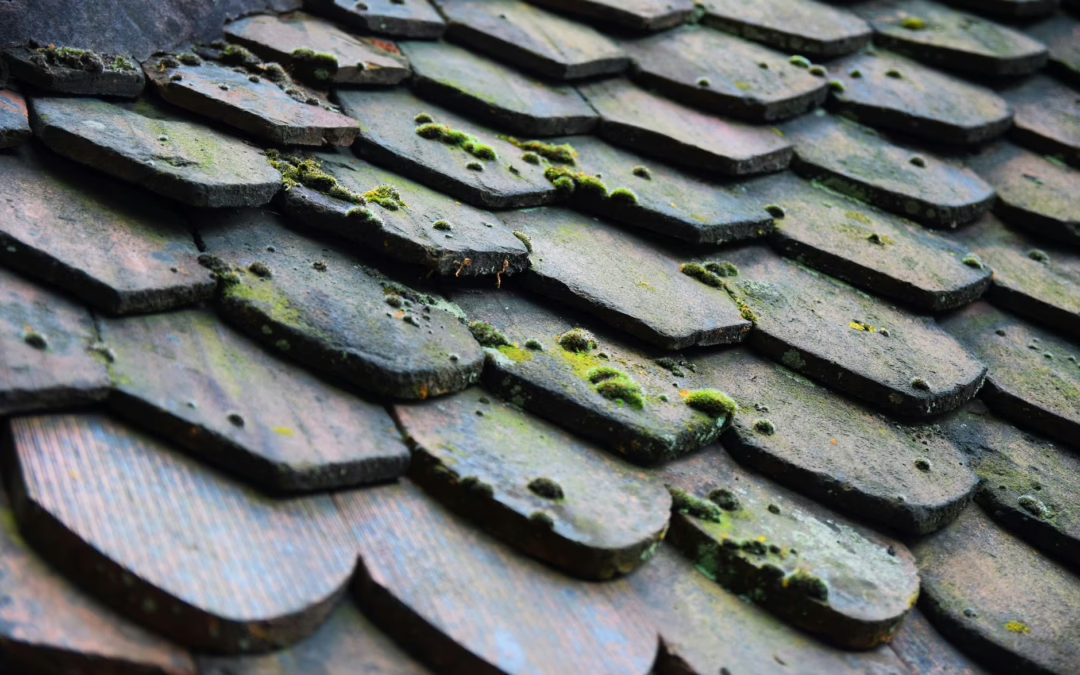
You see it from the driveway first. One roof plane stays darker than the rest, usually the north side or the slope under tall hemlocks. Those black streaks line up under the shingle tabs, and in the slow spots near the eaves you start getting a green fuzz that turns into little pads. Around the Lake Wallenpaupack area we get a lot of shade, a lot of overnight moisture, and plenty of roofs that never see full sun until late morning. That combo is why “moss on roof Greentown PA” is a common search.
The staining is not just a cosmetic thing. It tells us where water sits, where air does not move, and where runoff keeps washing the same track. We cannot change your tree line or the morning fog. We can control the roof system, the ventilation, the drainage, and the details that decide if those streaks stay mild or turn into shingle damage.
What the black streaks actually are, and why they follow the shingle pattern
Most of the black streaking we see is algae staining, not soot. It is usually Gloeocapsa magma, and it likes a roof that stays damp. The reason it makes “tiger stripes” is simple: water sheds off the shingle tabs and runs in the same channels over and over, so the colonies build where the film of moisture lasts longest.
On an asphalt shingle roof, that moisture film hangs around when the surface temperature stays low. A north facing slope that sits in shade can stay wet even on a day that hits 80°F, because the roof never gets the sun to dry out. Add a low pitch, say 4/12, and runoff moves slower. That is when the streaks get heavier.
The staining itself does not mean the roof is failing today. The risk is what comes with it. Algae and dirt hold moisture against the granules. Over time that can accelerate granule loss, and once granules thin out you get faster UV wear and you can start seeing the shingle mat.
Why moss shows up around Lake Wallenpaupack shade lines and damp roof planes
Moss is different than algae. Moss is a plant. It needs moisture, it wants shade, and it likes a surface where grit collects and stays put. The lake effect humidity and the tree cover around this part of Northeast PA make the perfect setup.
We see moss start where a roof stays wet longest: under overhanging branches, behind chimneys, and at the bottom third of the slope where runoff drops its debris. Pine needles and leaf fragments create a thin “soil” layer. Once that layer stays damp for days at a time, moss roots in.
The damage comes from lift. Moss pads act like a sponge. They hold water against the shingle, and in winter they can freeze. Freeze-thaw cycling pries at the shingle edges and can open up the bond line. Then wind driven rain has a path.
Another spot we watch is the transition areas. Valleys, sidewall flashing lines, and around plumbing vents. Moss does not have to cover the whole roof to cause trouble. A strip that is 6 inches wide in a valley can slow drainage and keep that metal wet.
Ventilation problems that keep roof sheathing damp and feed growth
A roof that cannot dry from the underside is a roof that grows things. Proper attic ventilation is part of that, and it is not a “nice to have.” The target most manufacturers and codes point to is balanced intake and exhaust, commonly sized around 1 square foot of net free vent area per 300 square feet of attic floor when you have a vapor retarder, and 1/150 when you do not.
Here is what we find on a lot of homes: plenty of exhaust, not enough intake. Ridge vent installed, but the soffits are blocked with insulation. Or there are box vents up top, but no continuous soffit venting to feed them. That setup pulls air from wherever it can, sometimes from a bathroom fan leak or a ceiling gap. That air carries moisture.
Wet sheathing is not theory. You can see it. Darkened OSB seams, rusty nail tips, and insulation that feels clumpy. In winter, a roof deck that stays cold with warm moist air hitting it will condense. That moisture can migrate up and keep the shingles damp longer, which makes algae and moss more likely on the exterior.
Gutters and roof drainage: the slow-water spots that stain and seed moss
Drainage is where staining turns into a pattern. If water does not leave the roof cleanly, it leaves tracks. A gutter that is pitched wrong, even by a small amount, holds water. Standing water means overflow during a hard rain. That overflow runs down the fascia and back onto the shingles at the eave line.
Clogging is the other big one. A 5 inch K-style gutter packed with wet leaves is basically a planter. It backs up, and the first course of shingles stays wet. You start seeing black streaks right above the gutter line, then moss in the corners where downspouts are slow.
We also look at the drip edge. Aluminum drip edge should be installed at the eaves and rakes, lapped correctly, and integrated with underlayment. If the drip edge is missing at the eave, water can wick back under the shingles and wet the roof deck edge. That keeps the lower roof colder and wetter, and it is exactly where moss likes to start.
If you are seeing staining that is heavier right under a valley or right under an upper roof dump, that is a drainage design issue, not a mystery stain.
What not to do: pressure washing, harsh chemicals, and “quick clean” damage
We get asked about pressure washing a lot. On asphalt shingles, a pressure washer can strip granules fast. Once granules are gone, they are gone. The roof might look cleaner for a season, then it weathers harder because you took off the protective surface.
Harsh chemicals are another trap. Chlorine bleach can kill moss, but it can also damage landscaping, corrode metal flashings, and it does not fix why the roof stayed wet in the first place. If runoff hits aluminum gutters, painted fascia, and downspouts, you can end up with streaked metals and dead plants below.
If a homeowner does any cleaning at all, the safe approach is gentle. Low pressure rinse, controlled application, and protecting the gutters and plantings. No abrasive brushing. No high PSI tip.
The bigger point is this: cleaning does not reset the clock on a roof. If the shingles are near the end of their service life, say 18 to 25 years depending on the shingle and ventilation, cleaning can expose how thin the granules already are. We would rather inspect the roof and tell you what you have than gamble with a “quick clean.”
Roof replacement details we control that reduce future staining and moss
If the roof is due for replacement, we can build in details that make algae and moss less likely to get a foothold again. That starts at the deck. Any soft or delaminated sheathing gets replaced. Most roofs are 7/16 inch OSB or 1/2 inch plywood. If we see swelling at panel edges, we do not bury it.
Underlayment matters too. We typically use a synthetic underlayment and we install ice and water shield at the eaves and in valleys. In our area, we commonly run the ice barrier at least 24 inches inside the warm wall line. That protects the vulnerable lower roof where moisture sits.
Ventilation gets corrected during a replacement because we have access. Continuous ridge vent paired with clear soffit intake is the cleanest setup on a simple gable roof. On hip roofs or chopped up rooflines, we may need a mix of ridge vent and box vents, but the goal stays the same: balanced airflow.
We also pay attention to drip edge, starter strip, and valley metal. Water has to leave the roof fast and predictably. The less time water sits, the less time algae and moss get.
How we inspect staining in Greentown PA, and what we document for insurance claims
A good inspection is not just standing back and calling it “moss.” We check slope by slope, and we look at what is driving the moisture. We walk the roof if it is safe, and if it is not, we use ladder access and photos.
We look for failure modes tied to growth: lifted shingle edges, exposed fiberglass mat, soft decking at eaves, and granule loss in the gutters. We also check penetrations. Plumbing vent boots crack. Step flashing gets buried by siding. Counterflashing at chimneys separates. Those are leak points that can keep an area damp and stained.
If there was a recent storm, staining can hide impact. We check for hail bruises, creased tabs, and displaced shingles. A roof that already has algae streaking can make it harder for a homeowner to see new damage, so we document it clearly with date-stamped photos and notes.
For insurance claims, documentation is everything. We note the number of layers, the condition of the deck where visible, and we photograph accessories like ridge vent, gutters, and downspouts. If a claim is warranted, we help you present the roof condition in a way an adjuster can verify on site.
Key Takeaways
- Black streaks on asphalt shingles are usually algae, and they follow the roof’s runoff channels under the shingle tabs.
- Moss needs shade, trapped debris, and days of dampness, and it often starts at eaves, valleys, and under tree cover.
- Poor intake ventilation (blocked soffits) can keep roof sheathing damp, leading to condensation and longer roof surface wet time.
- Gutter back-ups and missing or incorrect drip edge create slow-water zones that stain and seed moss.
- Pressure washing can strip granules, and harsh cleaners can damage metal and landscaping without fixing the moisture pattern.
- During replacement, deck repairs, ice and water shield, balanced ventilation, and clean drainage details reduce repeat growth.
Conclusion
If you are seeing black streaks and moss, the roof is telling you where it stays wet. That is the thread we pull. We look at shade lines, airflow, and how water leaves the roof, then we match the fix to what we find. Sometimes that is getting the ventilation balanced and the drainage cleaned up. Sometimes the shingles are worn thin and it is time to replace the roof and rebuild the details so it dries out like it should.
If you are in Greentown PA and the staining is spreading or moss is lifting shingle edges, get us out to take a look. We will tell you what is surface level, what is structural, and what needs to happen next so you are not chasing the same problem every year. You can reach us through our contact us page, or read more about our residential work and gutter installation options. If you want the service area details, here is our Greentown location page, and the main home page has the rest.
References
- National Roofing Contractors Association, guidance on how a roof system is put together and detailed